Stephen Curry and the Revolution of Three-Point Shooting
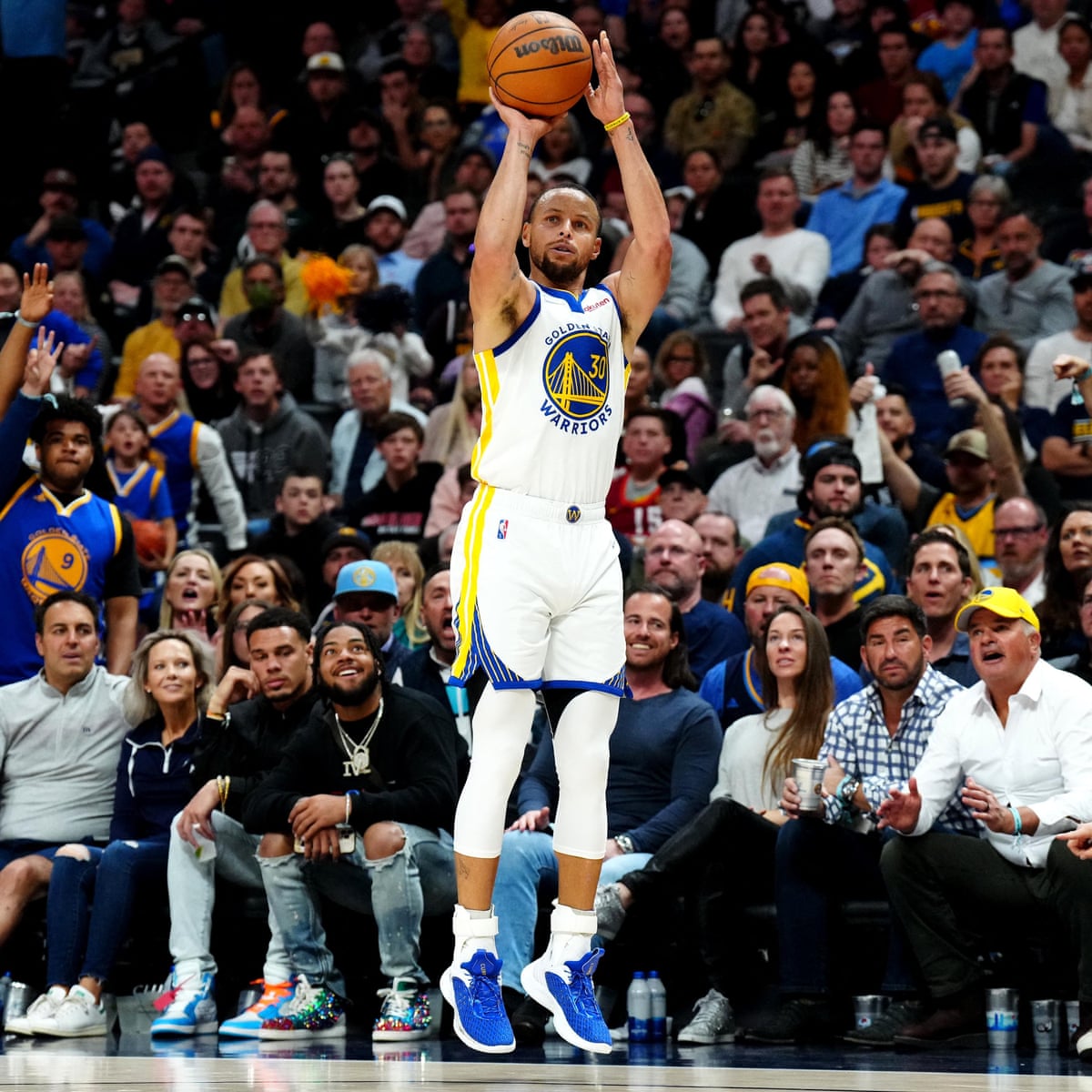
With a shooting range that seemed unreasonable by traditional standards, Curry demonstrated that a player could consistently threaten defenses from several feet beyond the three-point line. His ability to shoot quickly, accurately, and from unexpected positions forced opponents to reconsider where defensive pressure should begin.
But Stephen Curry’s impact on basketball extends far beyond making difficult three-pointers. He helped change how teams create space, how defenders respond to movement, and how young players understand offensive possibilities.
The Golden State Warriors built a championship identity around those qualities. Across multiple seasons, Curry became the centerpiece of an offense that combined shooting, movement, passing, and intelligent decision-making.
His career offers a compelling example of how one extraordinary skill, developed within the right team system, can influence an entire sport.
Before Stephen Curry: The Traditional Role of Three-Point Shooting
The NBA introduced the three-point line for the 1979–80 season. Initially, many teams treated the shot as a secondary offensive option.
Basketball strategy was largely organized around interior scoring, post play, and mid-range jump shots. Centers and power forwards frequently served as the primary scoring threats, while perimeter players were expected to create opportunities closer to the basket.
Three-point shooting gradually became more important through the contributions of players such as Larry Bird, Reggie Miller, Ray Allen, and other elite perimeter scorers.
These players proved that outside shooting could be decisive, particularly in close games.
However, most teams still operated with fairly traditional ideas about acceptable shooting distance and shot selection.
A three-pointer attempted several feet beyond the arc, especially early in the shot clock, was often considered unnecessarily risky.
Curry would eventually challenge that assumption.
Stephen Curry’s Early Life and Basketball Background
Wardell Stephen Curry II was born on March 14, 1988, in Akron, Ohio, and grew up largely in Charlotte, North Carolina.
Basketball was part of his family environment from an early age.
His father, Dell Curry, enjoyed a long NBA career and was known for his outside shooting. Growing up around professional basketball gave Stephen opportunities to observe the preparation, discipline, and technical details required at the highest level.
Despite his background, Curry was not initially viewed as an obvious future NBA superstar.
He lacked the imposing physical profile commonly associated with elite basketball prospects.
Major college programs did not recruit him as aggressively as many other highly rated players.
Instead, Curry attended Davidson College in North Carolina.
That decision became an important chapter in his development.
Davidson College: The Emergence of an Elite Shooter
At Davidson, Curry quickly demonstrated an unusual combination of scoring confidence, ball handling, and shooting ability.
He could create his own shots, move effectively without the ball, and score from distances that challenged conventional defensive positioning.
His national breakthrough came during the 2008 NCAA Tournament.
Davidson entered the tournament as a relatively small program competing against more established basketball schools.
Curry led the Wildcats on an unexpected run to the Elite Eight.
His performances against higher-seeded opponents attracted widespread attention.
He was not simply making open three-pointers. He was producing difficult shots while opponents designed their defenses specifically to stop him.
The tournament helped establish Curry as one of college basketball’s most exciting players.
It also revealed qualities that would later define his NBA career: shooting confidence, quick decision-making, and the ability to create offense despite intense defensive attention.
Joining the Golden State Warriors in 2009
The Golden State Warriors selected Curry with the seventh overall pick in the 2009 NBA Draft.
At the time, Golden State was not the championship organization it would later become.
The franchise was searching for consistency, and Curry entered the league with questions surrounding his size, defensive limitations, and ability to transition from college basketball.
His shooting talent was obvious, but becoming an NBA star required more than making long-range attempts.
Curry needed to adjust to faster defenders, more sophisticated defensive systems, and the physical demands of an 82-game regular season.
During his rookie campaign, he averaged 17.5 points and 5.9 assists per game.
Those numbers suggested that he could become an important NBA player.
Few observers, however, anticipated the scale of his eventual influence.
Early Ankle Injuries and Questions About His Future
Curry’s early NBA career was disrupted by recurring ankle problems.
Injuries limited his availability and raised concerns about whether he could withstand the demands of professional basketball.
During the 2011–12 season, he appeared in only 26 games.
For a young player whose greatest strengths depended on movement, balance, and rapid changes of direction, those injuries were particularly concerning.
Curry worked to improve his physical stability and conditioning as he recovered.
His eventual return to consistent high-level performance became one of the most important turning points in his career.
Without that recovery, the Warriors’ later championship success might have unfolded very differently.
The Breakthrough: A New Kind of Offensive Threat
During the 2012–13 season, Curry established himself as one of the NBA’s most dangerous shooters.
He made 272 three-pointers, setting a new single-season NBA record at the time.
More importantly, the way he generated those shots challenged traditional offensive expectations.
Curry could shoot after dribbling, move into open space without the ball, and release attempts before defenders could fully react.
His range also extended well beyond the three-point line.
Defenders could no longer assume that standing near the arc was enough to contain him.
They had to pressure him farther from the basket, which created opportunities elsewhere on the court.
This was the beginning of a strategic shift that would eventually influence the entire league.
Why Stephen Curry’s Shooting Is So Difficult to Defend
Curry’s effectiveness cannot be explained by accuracy alone.
Several interconnected skills make his shooting unusually difficult to contain.
1. Exceptional Shooting Range
Most perimeter shooters are most comfortable taking shots near the three-point line.
Curry can create legitimate scoring threats from considerably farther away.
That range changes the geometry of the court.
When a defender must pressure a shooter several feet beyond the arc, the defense has more ground to cover.
Driving lanes become wider, passing opportunities emerge, and help defenders face more difficult decisions.
2. A Quick Shooting Release
Curry requires very little time to prepare a shot.
His ability to move from receiving the ball to releasing it quickly reduces the defender’s opportunity to contest.
This is especially important against NBA defenders, who possess exceptional speed and reaction time.
Even a small delay can determine whether a shot is open or heavily contested.
3. Shooting Off the Dribble
Traditional spot-up shooters often depend on teammates to create open opportunities.
Curry can generate shots through his own dribbling and movement.
He uses changes of pace, hesitation moves, and screens to create separation.
That ability makes him dangerous even when the defense prevents easy catch-and-shoot opportunities.
4. Constant Movement Without the Ball
One of Curry’s most overlooked strengths is how much he moves when he is not handling the ball.
He runs through screens, changes direction, relocates after passing, and forces defenders to maintain concentration throughout possessions.
This movement creates opportunities for both Curry and his teammates.
Defenders who focus too heavily on him may leave another player open.
The Golden State Warriors and the Rise of a New Offense
Curry’s shooting became even more influential when the Warriors developed an offensive system that maximized his strengths.
Under head coach Steve Kerr, Golden State emphasized ball movement, spacing, cutting, and quick decisions.
The team did not rely exclusively on isolation scoring.
Instead, players moved continuously to create advantages.
Curry’s shooting gravity became a central part of that system.
Because defenders feared his outside shot, they often followed him far from the basket.
That attention opened space for teammates to attack.
Klay Thompson provided another elite shooting threat, while Draymond Green contributed passing, screening, and defensive versatility.
Andre Iguodala and other supporting players added experience and positional flexibility.
Together, the Warriors developed an offensive identity that challenged more traditional NBA strategies.
What Is Shooting Gravity in Basketball?
The term “shooting gravity” describes the defensive attention a player attracts because of their ability to score from distance.
Curry is one of the clearest examples of this concept.
Even when he does not shoot, his presence influences defensive positioning.
Opponents may assign extra attention to him, switch defenders more aggressively, or position help defenders closer to the perimeter.
Those adjustments can create opportunities for other players.
For example, when two defenders focus on Curry during a screen, another Warriors player may receive the ball with a numerical advantage.
The offense can then attack before the defense recovers.
This is why Curry’s impact cannot always be measured through points or three-point percentages alone.
His movement and reputation influence possessions even when he never touches the ball.
The 2015 NBA Championship: A New Era Begins
The Warriors won the NBA championship in 2015, defeating the Cleveland Cavaliers in six games.
Curry had already won the regular-season MVP award that year.
The championship demonstrated that a team built around perimeter shooting, movement, and versatility could succeed at the highest level.
It did not mean that traditional interior basketball had become irrelevant.
Rebounding, defense, and scoring near the basket remained essential.
However, Golden State showed that a different offensive balance could produce championship results.
The Warriors’ success encouraged other teams to reconsider the role of three-point shooting in their own systems.
The Historic 2015–16 Season
The following season became one of the most remarkable individual campaigns in NBA history.
Curry made 402 three-pointers during the 2015–16 regular season.
He became the first player to make at least 400 three-pointers in a single NBA season.
He also averaged 30.1 points per game and won the scoring title.
Golden State finished the regular season with a 73–9 record, surpassing the Chicago Bulls’ previous record of 72 wins.
Curry received every first-place vote in the NBA MVP voting, becoming the league’s first unanimous regular-season MVP.
His combination of shooting volume, accuracy, and shot difficulty was extraordinary.
However, the Warriors did not finish the season as champions.
Golden State lost the 2016 NBA Finals to Cleveland after leading the series 3–1.
That defeat remains an important part of the season’s historical context.
It illustrates how a record-breaking regular season does not guarantee postseason success.
Four NBA Championships and a Lasting Dynasty
Curry’s career has been closely connected to the Warriors’ championship era.
Golden State won NBA titles in 2015, 2017, 2018, and 2022.
| Year | Finals Opponent | Result |
|---|---|---|
| 2015 | Cleveland Cavaliers | Warriors won 4–2 |
| 2017 | Cleveland Cavaliers | Warriors won 4–1 |
| 2018 | Cleveland Cavaliers | Warriors won 4–0 |
| 2022 | Boston Celtics | Warriors won 4–2 |
The championships in 2017 and 2018 came after Kevin Durant joined Golden State.
His arrival gave the Warriors another elite offensive option and made the team especially difficult to defend.
Some critics argued that the roster’s talent made those championships less impressive.
Others viewed the team’s ability to combine several elite players within one system as an achievement in itself.
Regardless of that debate, Curry remained central to Golden State’s offensive identity.
The 2022 Championship and Curry’s Finals MVP
The Warriors returned to the NBA Finals in 2022 after several challenging seasons.
Injuries, roster changes, and the departure of Kevin Durant had altered the team’s circumstances.
Golden State faced the Boston Celtics in the championship series.
Curry delivered outstanding performances, including a 43-point game in Game 4.
The Warriors won the series in six games.
Curry received his first NBA Finals MVP award.
The achievement was significant because it reinforced his ability to lead a championship team during a different stage of his career.
He was no longer the young star surprising opponents with extraordinary shooting.
He had become an experienced leader whose skill, decision-making, and movement remained central to championship basketball.
Breaking the NBA’s All-Time Three-Point Record
On December 14, 2021, Curry passed Ray Allen to become the NBA’s all-time leader in regular-season three-pointers made.
The milestone occurred at Madison Square Garden against the New York Knicks.
Ray Allen had previously held the record with 2,973 career three-pointers.
Curry’s achievement reflected more than the number of shots he made.
It demonstrated how dramatically the role of perimeter shooting had changed during his career.
Earlier generations produced exceptional three-point shooters, but Curry combined unusually high shooting volume with exceptional range and efficiency.
His record became a symbol of the modern NBA’s transformation.
How Stephen Curry Changed NBA Offensive Strategy
Curry did not single-handedly invent the modern three-point revolution.
Basketball analytics, rule changes, coaching innovations, and the work of earlier shooters all contributed to the growing importance of perimeter offense.
However, Curry accelerated the process by demonstrating what was possible when a team built its system around an extraordinary shooter.
More Three-Point Attempts
NBA teams increasingly recognized the mathematical value of efficient three-point shooting.
A made three-pointer produces 50 percent more points than a made two-pointer.
That does not automatically make every three-point attempt a good decision, but it changes how coaches evaluate shot selection.
Curry’s success helped make high-volume perimeter shooting more acceptable.
Greater Floor Spacing
When defenders must respect shooting threats far from the basket, offensive players gain more room to operate.
This spacing creates driving lanes and can improve opportunities for passes into the paint.
Golden State used Curry’s shooting to create those advantages repeatedly.
More Flexible Offensive Roles
Curry also challenged traditional expectations of a point guard.
He could organize possessions, score from long distance, and remain dangerous without the ball.
That combination encouraged coaches to value guards who could contribute through multiple offensive responsibilities.
Stephen Curry and the Rise of Deep Three-Pointers
One of Curry’s most recognizable contributions is his willingness to shoot from well beyond the three-point line.
These attempts can appear reckless when judged by traditional standards.
However, shot quality depends partly on the abilities of the player taking the shot.
A distance that represents a low-percentage attempt for one player may be more reasonable for an exceptional shooter.
Curry’s success forced defenders to extend their coverage.
That additional defensive pressure can create offensive advantages elsewhere.
Other players, including Damian Lillard and Trae Young, have also demonstrated the strategic value of extended shooting range.
Deep three-pointers have become a more visible part of modern basketball, although they still require exceptional skill and careful shot selection.
The Influence on Young Basketball Players
Curry’s influence is especially visible in youth basketball.
Many young players now practice three-point shooting earlier and attempt shots from greater distances.
His popularity has made perimeter shooting one of basketball’s most admired skills.
However, copying Curry’s shot selection without developing proper fundamentals can create problems.
Young players may attempt long-distance shots before they have sufficient strength, balance, or shooting consistency.
Effective shooting development should begin with technique, footwork, body control, and appropriate distance.
Curry’s success is not simply the result of confidence.
It reflects years of practice, repetition, and technical refinement.
For developing players, that preparation is a more useful lesson than attempting spectacular shots from half court.
Why Curry’s Impact Goes Beyond Statistics
Statistics can measure shooting percentage, three-pointers made, points, and assists.
They cannot fully capture the way Curry changes defensive behavior.
When he moves across the court, defenders must decide whether to follow him, switch assignments, or help teammates.
Each decision creates potential weaknesses.
His teammates can exploit those openings through cuts, passes, and drives.
This influence is especially valuable in an offensive system built around continuous movement.
Curry’s presence changes what opponents consider dangerous.
That is one reason his importance to basketball history extends beyond the record books.
Stephen Curry’s Major Career Achievements
Curry’s achievements reflect his individual excellence and Golden State’s sustained success.
| Achievement | Record |
|---|---|
| NBA Championships | 4 (2015, 2017, 2018, 2022) |
| NBA Regular-Season MVP Awards | 2 (2015, 2016) |
| NBA Finals MVP | 2022 |
| Unanimous NBA MVP | 2016 |
| NBA Scoring Titles | 2 (2016, 2021) |
| Single-Season Three-Pointers Made | 402 (2015–16) |
| NBA All-Time Regular-Season Three-Point Leader | Record achieved in 2021 |
| Olympic Gold Medal | 2024 |
His achievements demonstrate that exceptional shooting can serve as the foundation of a championship-level career when combined with playmaking, teamwork, and tactical intelligence.
Stephen Curry vs. Other Legendary Shooters
Basketball history includes several players who helped develop the three-point shot.
Larry Bird demonstrated the value of perimeter accuracy during an era when outside shooting was less central to offensive strategy.
Reggie Miller became famous for his movement without the ball and ability to make important shots under pressure.
Ray Allen combined consistent shooting mechanics with a long career and previously held the NBA’s all-time three-point record.
Klay Thompson became one of the most effective catch-and-shoot players in league history.
Curry shares qualities with these players, but his combination of off-the-dribble shooting, extended range, high volume, and offensive creation distinguishes his style.
His influence also came at a time when teams were increasingly willing to organize their offenses around perimeter efficiency.
That timing helped turn his individual skill into a league-wide strategic influence.
The Criticism of Modern Three-Point Basketball
Not everyone welcomes the growing emphasis on three-point shooting.
Some fans and analysts argue that modern offenses have become too dependent on perimeter attempts.
They believe the game has lost some of the stylistic variety associated with post scoring, mid-range shooting, and traditional interior play.
Others argue that modern basketball is more dynamic because spacing creates opportunities for driving, passing, and creative offensive movement.
Both perspectives identify real changes in the sport.
Three-point shooting has become more prominent, but successful teams still need defensive organization, rebounding, interior scoring, and effective decision-making.
Curry’s Warriors were never successful simply because they attempted difficult outside shots.
Their championships depended on a combination of shooting, defense, passing, and teamwork.
That distinction is important when evaluating his influence.
Stephen Curry’s Legacy in Basketball History
Great players are often remembered for their championships, awards, and unforgettable performances.
Curry has achieved all three.
However, his legacy includes something less common: he helped change how basketball is played.
His shooting range altered defensive positioning.
His movement demonstrated the value of creating offense without constantly controlling the ball.
His success encouraged teams to reconsider the importance of perimeter efficiency.
And his career helped redefine what a superstar point guard could look like.
Curry’s influence is visible in professional basketball, college programs, and youth development around the world.
Future generations will continue developing new approaches to offense, but his contribution will remain an important part of the sport’s evolution.
Frequently Asked Questions About Stephen Curry
How many NBA championships has Stephen Curry won?
Stephen Curry has won four NBA championships with the Golden State Warriors, in 2015, 2017, 2018, and 2022.
When did Stephen Curry enter the NBA?
Curry entered the NBA in 2009 after being selected seventh overall by the Golden State Warriors.
How many MVP awards has Stephen Curry won?
Curry has won two NBA regular-season MVP awards, in 2015 and 2016.
Was Stephen Curry the first unanimous NBA MVP?
Yes. Curry became the first unanimous NBA regular-season MVP in 2016.
When did Stephen Curry break the NBA three-point record?
He passed Ray Allen’s career regular-season three-point record on December 14, 2021.
How many three-pointers did Stephen Curry make in the 2015–16 season?
Curry made 402 three-pointers during the 2015–16 NBA regular season.
Why is Stephen Curry considered a revolutionary player?
His combination of long-range accuracy, shooting volume, movement, and offensive versatility helped transform NBA strategy and defensive positioning.
What is shooting gravity?
Shooting gravity describes the defensive attention a player attracts because of their shooting threat, creating opportunities for teammates elsewhere on the court.
Did Stephen Curry win an Olympic gold medal?
Yes. Curry won an Olympic gold medal with the United States men’s basketball team at the 2024 Paris Olympics.
Did Stephen Curry invent three-point shooting?
No. Three-point shooting existed long before Curry entered the NBA. His contribution was demonstrating how exceptionally effective high-volume, long-distance shooting could become within a modern offensive system.
Conclusion: The Player Who Changed Basketball’s Geometry
Stephen Curry did not invent the three-point shot, but he helped redefine its possibilities.
His career demonstrated that shooting from long distance could be more than an occasional offensive option.
It could become the foundation of a championship-winning system.
Through his range, quick release, movement, and decision-making, Curry forced defenders to cover areas of the court that previous generations rarely treated as immediate scoring threats.
That change created new opportunities for teammates and encouraged coaches to rethink traditional offensive structures.
His four NBA championships, two MVP awards, and historic three-point records confirm his place among the game’s greatest players.
Yet his broader influence may prove even more significant.
Modern basketball continues to evolve through analytics, coaching innovation, and new generations of talented players.
Curry’s contribution is that he helped demonstrate what could happen when an extraordinary skill was developed, trusted, and integrated into a complete team philosophy.
He changed more than the distance from which players shoot.
He changed how basketball teams understand space, opportunity, and offensive possibility.
Leave a Reply