Monaco Grand Prix: Why It Remains Formula 1’s Most Famous Race
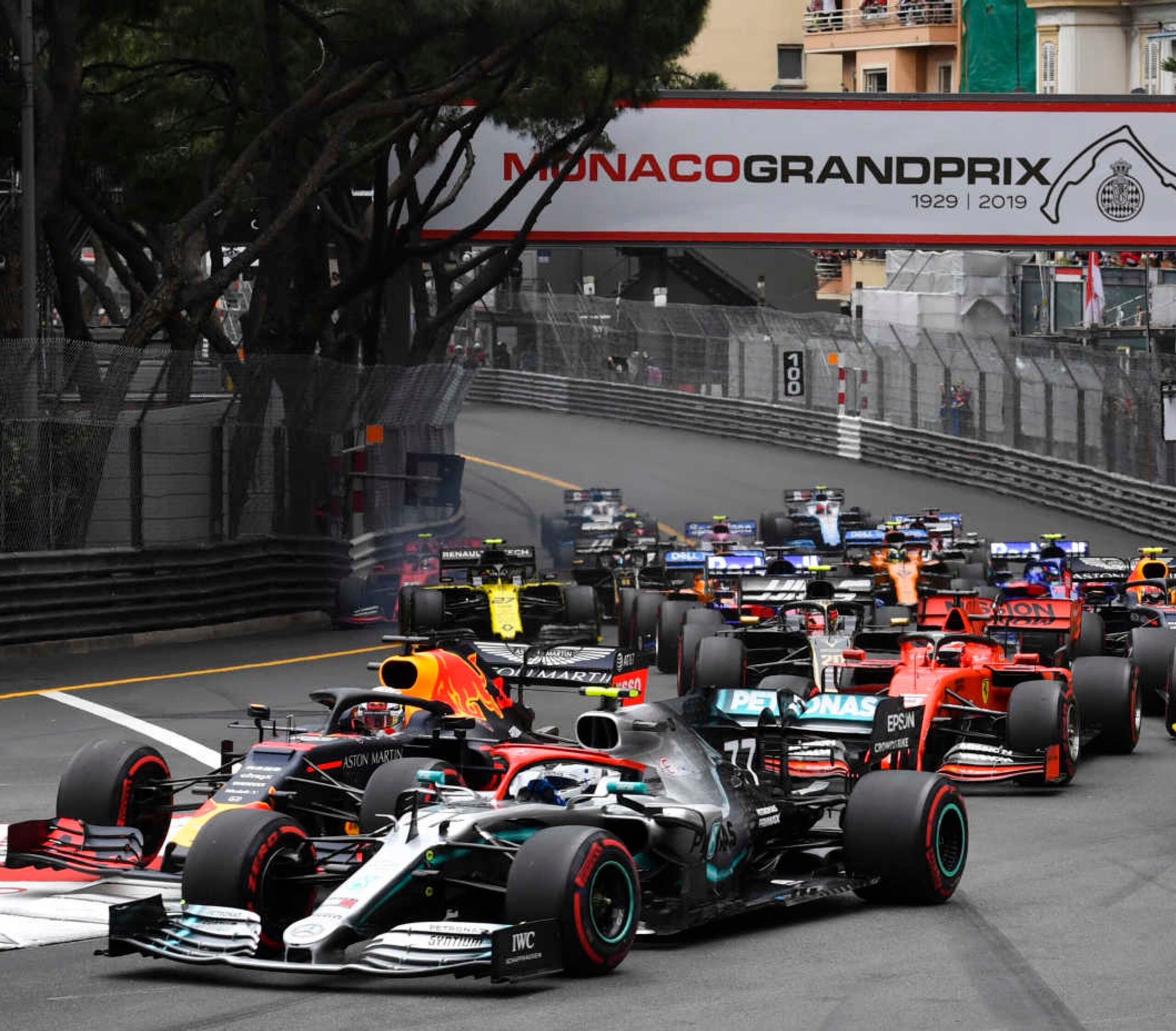
Held in the streets of Monte Carlo and La Condamine, the race passes between buildings, barriers, luxury hotels, and the famous Monaco harbor. Its setting has become instantly recognizable, even to people who rarely watch Formula 1.
But Monaco’s reputation is not based entirely on glamorous scenery.
The race has a history stretching back to 1929, decades before the Formula 1 World Championship was established. It has produced unforgettable victories, dramatic accidents, and qualifying performances that remain part of racing folklore.
Some of the sport’s greatest drivers, including Ayrton Senna, Graham Hill, Alain Prost, Michael Schumacher, and Lewis Hamilton, have won on its demanding streets.
At the same time, Monaco raises an increasingly important question: does a circuit where overtaking is so difficult still deserve its place among Formula 1’s most prestigious events?
The answer requires looking beyond the race result and understanding what makes Monaco different.
How the Monaco Grand Prix Began in 1929
The Monaco Grand Prix was first held on April 14, 1929, long before Formula 1 became an official world championship.
The event was organized through the efforts of Antony Noghès and the Automobile Club de Monaco, which sought to establish an international motor race within the principality.
Creating a circuit through Monaco’s public streets was an ambitious undertaking.
Unlike traditional racing venues, the proposed route passed through an urban environment with narrow roads, elevation changes, and limited space.
These characteristics would eventually become central to the event’s identity.
William Grover-Williams won the inaugural race driving a Bugatti.
His victory marked the beginning of a racing tradition that would survive enormous changes in automotive technology and motorsport organization.
During the following decades, the event became one of Europe’s important Grand Prix races.
Although racing was interrupted during the Second World War and its aftermath, Monaco returned to international competition and eventually became closely associated with Formula 1.
Monaco and the Beginning of the Formula 1 World Championship
The Formula 1 World Championship began in 1950, and Monaco hosted the second championship round that season.
Juan Manuel Fangio won the race, adding an early chapter to a career that would eventually produce five World Drivers’ Championships.
The event did not appear on the championship calendar every year during the early 1950s.
However, from 1955 through 2019, Monaco became an uninterrupted fixture on the Formula 1 calendar.
The 2020 race was canceled because of the COVID-19 pandemic, breaking that long sequence.
Monaco returned in 2021 and continued to hold its position as one of the championship’s most recognizable events.
Its importance comes partly from that longevity.
Many Formula 1 circuits have been redesigned, relocated, or removed from the calendar.
Monaco, despite modifications to its layout and safety arrangements, has retained much of its historic street-circuit character.
What Makes the Circuit de Monaco So Different?
The Circuit de Monaco is approximately 3.337 kilometers long, making it one of the shortest circuits on the Formula 1 calendar.
Its compact layout includes tight corners, steep elevation changes, a tunnel, and sections where concrete barriers sit extremely close to the racing line.
Unlike modern permanent circuits, Monaco provides very little room for error.
Drivers cannot routinely run wide beyond the track limits and recover without consequences.
A small misjudgment can result in contact with the barriers, suspension damage, or immediate retirement.
The circuit also demands a different approach to car setup.
Teams generally prioritize maximum aerodynamic downforce, mechanical grip, and steering performance rather than outright straight-line speed.
Cars must respond effectively through slow corners while remaining stable over bumps and changes in elevation.
For drivers, Monaco is an exercise in precision.
The challenge is not simply to complete one fast lap but to repeat accurate braking points and cornering lines without making a costly mistake.
The Most Famous Corners at Monaco
Several sections of the Circuit de Monaco have become landmarks in Formula 1 history.
Sainte Dévote
The opening corner is a tight right-hand turn reached after the short start-finish straight.
It is especially important at the beginning of a race because the field arrives closely packed together.
Contact and incidents can occur when multiple drivers attempt to negotiate the corner at the same time.
Casino Square
After climbing the hill from Sainte Dévote, drivers approach the famous Casino Square section.
The surrounding buildings and elevation changes create one of Formula 1’s most recognizable visual settings.
Despite the glamorous surroundings, the driving challenge is substantial.
Drivers must position their cars precisely while managing grip and steering through the changing road profile.
The Fairmont Hairpin
The Fairmont Hairpin, historically known by several names including the Loews Hairpin, is one of Formula 1’s slowest corners.
Its extremely tight radius requires substantial steering lock.
Drivers slow dramatically to negotiate the turn, making it a distinctive feature of the circuit.
Although the corner is visually spectacular, overtaking there is exceptionally difficult.
The Tunnel
The tunnel provides a striking contrast with Monaco’s slower corners.
Cars accelerate through a covered section before emerging into daylight and approaching a heavy braking zone.
The rapid transition between lighting conditions adds another complication for drivers.
The braking area after the tunnel has historically offered one of Monaco’s limited overtaking opportunities.
The Swimming Pool Complex
The Swimming Pool section features quick changes of direction and barriers close to the racing line.
Drivers must carry speed through the sequence while maintaining precise control.
It is one of the sections where commitment and accuracy can make a significant difference to lap time.
La Rascasse and Anthony Noghès
The final section includes the slow La Rascasse corner and the Anthony Noghès turn leading onto the start-finish straight.
These corners demand careful throttle application because drivers want to maximize acceleration onto the next lap.
The section also has a place in Formula 1 history because of incidents and controversies that have occurred during qualifying.
Why Qualifying Is So Important at Monaco
Qualifying matters at every Formula 1 circuit, but its importance is particularly pronounced at Monaco.
The narrow roads and limited overtaking opportunities make track position extremely valuable.
A driver starting near the front can often control the pace of competitors behind, even when those competitors possess faster cars.
This creates an unusual competitive situation.
At circuits with long straights and multiple passing opportunities, race pace may allow a driver to recover from a disappointing qualifying session.
At Monaco, recovering positions can be considerably more difficult.
Drivers therefore approach qualifying with exceptional commitment.
They must find the limits of grip while remaining only centimeters away from the barriers.
A small improvement in braking or cornering precision can determine several positions on the starting grid.
However, the risk of an accident is equally high.
One mistake can damage the car and prevent a driver from completing another attempt.
This combination of precision, pressure, and limited recovery opportunities helps explain why Monaco qualifying is often regarded as one of the most exciting sessions of the season.
Ayrton Senna: The King of Monaco
No driver is more closely associated with Monaco Grand Prix success than Ayrton Senna.
The Brazilian won the event six times, a record that remains one of the circuit’s defining statistics.
His victories came in 1987 and consecutively from 1989 through 1993.
Senna’s extraordinary ability to extract lap time from a car on narrow streets made Monaco an ideal setting for his driving talent.
His reputation at the circuit was established even before his first victory.
At the rain-soaked 1984 Monaco Grand Prix, Senna drove his relatively uncompetitive Toleman through the field and challenged race leader Alain Prost.
The race was stopped because of worsening conditions, leaving Senna second.
Although he did not win, the performance demonstrated his exceptional skill in difficult circumstances.
The Legendary 1988 Qualifying Lap
Senna’s performance during qualifying for the 1988 Monaco Grand Prix remains one of the most famous moments of his career.
Driving for McLaren, he secured pole position by approximately 1.4 seconds over teammate Alain Prost.
Such a margin between drivers in competitive machinery was extraordinary.
Senna later described the experience as a moment of unusually intense concentration.
However, the race itself ended in disappointment.
While leading comfortably, Senna struck the barriers and retired.
The incident illustrated the unforgiving nature of Monaco.
Even a driver capable of producing an exceptional qualifying lap could lose everything through one mistake.
Graham Hill: The Original Mr. Monaco
Before Senna established his record, Graham Hill was the driver most strongly associated with Monaco success.
Hill won the Monaco Grand Prix five times between 1963 and 1969.
His victories earned him the nickname “Mr. Monaco.”
Hill was known for his smooth driving style and ability to manage difficult racing conditions.
His achievements also contributed to another distinction.
He remains the only driver to have completed motorsport’s traditional Triple Crown by winning the Monaco Grand Prix, the Indianapolis 500, and the 24 Hours of Le Mans.
Hill’s success helped establish Monaco as a race where driver skill and consistency could become more important than pure engine power.
Michael Schumacher and Monaco’s Modern Era
Michael Schumacher won the Monaco Grand Prix five times during his Formula 1 career.
His victories came in 1994, 1995, 1997, 1999, and 2001.
Schumacher’s success reflected his ability to combine precise driving with effective race management.
During the 1990s and early 2000s, he became one of the leading figures in Formula 1, eventually winning seven World Drivers’ Championships.
Monaco also featured one of the more controversial moments of his career.
During qualifying in 2006, Schumacher stopped his Ferrari near La Rascasse, bringing out yellow flags and affecting the final qualifying attempts of other drivers.
Stewards determined that his actions were deliberate and sent him to the back of the grid.
The incident demonstrated how valuable qualifying position had become at Monaco.
It also reinforced the importance of sporting regulations at a circuit where track position can determine the outcome of the race.
Why Monaco Is Part of Motorsport’s Triple Crown
The Monaco Grand Prix occupies a special place in international motorsport because it forms part of the traditional Triple Crown.
The three events commonly associated with the achievement are:
- The Monaco Grand Prix.
- The Indianapolis 500.
- The 24 Hours of Le Mans.
Each race represents a different challenge.
Monaco emphasizes precision on narrow streets.
Indianapolis demands exceptional speed and racecraft on a high-speed oval.
Le Mans tests endurance, reliability, and teamwork over 24 hours.
Winning all three requires versatility across very different forms of racing.
Graham Hill remains the only driver to have achieved the traditional Triple Crown.
Monaco’s place within this group reflects its importance beyond the Formula 1 championship.
The Glamour of Monaco: More Than a Racing Circuit
Monaco is internationally associated with luxury, tourism, and high-profile social events.
During Grand Prix weekend, its harbor fills with yachts, while hotels, balconies, and hospitality areas overlook the circuit.
The combination of racing and scenery creates a spectacle that differs from a conventional motorsport venue.
Television coverage frequently shows the Mediterranean coastline, famous buildings, and crowds gathered above the streets.
These images have helped make Monaco recognizable to audiences who may not follow Formula 1 throughout the year.
However, the event’s glamorous identity also attracts criticism.
Some observers argue that Monaco receives special treatment because of its prestige and commercial value rather than the quality of its racing.
Others believe that the setting, history, and distinctive driving challenge justify its continued place on the calendar.
Both perspectives highlight the unusual role Monaco plays in Formula 1.
It is simultaneously a sporting competition, a historic tradition, and an international cultural event.
Why Overtaking Is So Difficult at Monaco
One of the most frequent criticisms of the Monaco Grand Prix concerns the lack of overtaking.
The circuit was created long before modern Formula 1 cars became as wide, fast, and aerodynamically sophisticated as they are today.
Its narrow roads leave little room for two cars to negotiate many corners side by side.
Even when a following driver has a significant performance advantage, finding a safe opportunity to pass can be extremely difficult.
Several factors contribute to this problem.
- The circuit contains few long straights.
- Many corners are too narrow for conventional overtaking moves.
- Barriers leave almost no runoff area.
- Track position can be defended effectively through slower sections.
- Modern cars require considerable space during braking and cornering.
These limitations can create races where drivers spend long periods following slower cars without being able to overtake.
For some fans, this reduces the excitement of Sunday racing.
For others, the tension comes from watching drivers operate close to the barriers while teams attempt to gain positions through strategy.
The 2025 Monaco Pit Stop Rule Experiment
Formula 1 introduced a special tire strategy requirement for the 2025 Monaco Grand Prix.
The rule required drivers to use at least three sets of tires during the race, effectively creating a minimum two-stop strategy under normal racing circumstances.
The objective was to introduce greater strategic variation and reduce the predictability associated with limited overtaking opportunities.
However, the experiment also demonstrated the difficulty of improving racing at Monaco through regulations alone.
Teams could still use track position and coordinated strategies to influence the pace of competitors.
The 2025 race produced debate about whether mandatory additional stops created meaningful competition or simply introduced more complicated tactical behavior.
The broader lesson was that Monaco’s racing limitations are primarily linked to its physical layout.
Strategy rules can influence the order of events, but they cannot fundamentally change the width of the streets or create new overtaking zones.
Monaco Grand Prix vs. Modern Formula 1 Circuits
Monaco’s characteristics become clearer when compared with modern permanent circuits.
| Feature | Monaco Grand Prix | Typical Modern F1 Circuit |
|---|---|---|
| Circuit Type | Public street circuit | Often a purpose-built facility |
| Track Width | Very narrow | Generally wider |
| Runoff Areas | Extremely limited | Often more extensive |
| Overtaking | Exceptionally difficult | Usually more opportunities |
| Qualifying Importance | Exceptionally high | High but varies by circuit |
| Primary Challenge | Precision and track position | Varies with speed, layout, and tire demands |
This comparison illustrates why Monaco cannot be evaluated using exactly the same expectations as every other Grand Prix.
Its challenge is distinctive, although that distinction does not eliminate legitimate concerns about racing quality.
How Teams Approach Monaco Differently
Formula 1 teams make several adjustments when preparing for Monaco.
The circuit’s slow corners and narrow streets create a different balance of technical priorities.
Maximum Downforce
Teams generally use high-downforce aerodynamic configurations because Monaco contains relatively few sections where low drag provides a major advantage.
Additional downforce helps improve grip and stability through corners.
Mechanical Grip
Suspension behavior is particularly important because the circuit includes bumps, elevation changes, and tight corners.
Teams must ensure the car remains predictable when navigating these conditions.
Steering Performance
The extremely tight Fairmont Hairpin requires substantial steering lock.
Cars may need circuit-specific steering adjustments to negotiate the corner effectively.
Qualifying Preparation
Teams place considerable emphasis on qualifying performance.
Finding clean track space, managing tire temperatures, and preparing the car for a single fast lap can be decisive.
Race Strategy
Because overtaking is difficult, teams closely monitor pit-stop timing and the possibility of rejoining behind slower traffic.
Maintaining track position can sometimes be more valuable than achieving the fastest possible lap times.
Memorable Monaco Grand Prix Moments
Monaco’s long history includes numerous races that continue to be discussed by Formula 1 fans.
1982: A Chaotic Finish
The closing laps of the 1982 Monaco Grand Prix became famous for a series of unexpected incidents.
Several drivers appeared to have opportunities to win before suffering mistakes, mechanical problems, or fuel-related issues.
Riccardo Patrese ultimately emerged as the winner.
The race remains an example of how Monaco can produce unpredictable outcomes even when overtaking opportunities are limited.
1984: Senna’s Rain-Soaked Breakthrough
Ayrton Senna’s performance in wet conditions demonstrated his extraordinary ability to control a Formula 1 car on a difficult circuit.
Although the race ended before he could challenge for victory, it helped establish his reputation as a future star.
1996: Olivier Panis Wins an Extraordinary Race
The 1996 Monaco Grand Prix became one of the most unusual races in the event’s history.
Wet conditions, accidents, and mechanical failures eliminated numerous competitors.
Olivier Panis won for Ligier after starting 14th on the grid.
Only three cars were classified as finishers.
The victory remains one of Formula 1’s most surprising results.
2018: Daniel Ricciardo Wins Despite Mechanical Trouble
Daniel Ricciardo won the 2018 Monaco Grand Prix despite suffering a significant power-related mechanical problem during the race.
He managed the issue while defending his position against Sebastian Vettel.
The victory demonstrated how Monaco’s limited overtaking opportunities can allow a driver to protect the lead even with a compromised car.
2024: Charles Leclerc Wins at Home
Charles Leclerc secured an emotional victory at the 2024 Monaco Grand Prix.
Born and raised in Monaco, Leclerc had experienced several disappointments at his home race despite showing strong qualifying pace.
His victory for Ferrari made him the first Monegasque driver to win the Formula 1 World Championship race in Monaco.
The achievement carried particular significance because of his personal connection with the principality.
Is Monaco Still Suitable for Modern Formula 1?
As Formula 1 continues to evolve, Monaco’s place on the calendar remains a subject of debate.
Modern racing cars have become highly sophisticated, and the sport increasingly emphasizes close competition and overtaking opportunities.
Monaco’s physical layout makes it difficult to achieve those goals.
Major changes to the circuit would also be challenging because the race takes place within a densely developed urban environment.
Some fans believe Formula 1 should prioritize circuits that consistently produce more overtaking and wheel-to-wheel racing.
Others argue that Monaco provides a different type of sporting test that deserves preservation.
Qualifying at Monaco demands exceptional precision, while race management requires discipline and concentration.
Its historical significance is also difficult to replace.
Rather than treating Monaco as a conventional circuit, Formula 1 must balance the value of tradition against the expectations of modern audiences.
That tension is likely to remain part of the event’s identity.
Why Winning Monaco Still Matters to Formula 1 Drivers
Despite the criticism surrounding overtaking, winning the Monaco Grand Prix remains a major career achievement.
The race is associated with some of the greatest names in Formula 1 history.
Its demanding layout also gives drivers an opportunity to demonstrate precision and mental discipline.
A successful Monaco weekend requires confidence, technical preparation, and the ability to perform under intense pressure.
For drivers, victory means joining a historic list that includes Fangio, Hill, Senna, Schumacher, Prost, and Hamilton.
For teams, success at Monaco carries significant prestige because of the event’s visibility and reputation.
These factors help explain why the race continues to hold an importance that extends beyond the championship points available.
Frequently Asked Questions About the Monaco Grand Prix
When was the first Monaco Grand Prix held?
The first Monaco Grand Prix took place on April 14, 1929.
Who won the first Monaco Grand Prix?
William Grover-Williams won the inaugural event in 1929 driving a Bugatti.
When did Monaco become part of Formula 1?
Monaco hosted a round of the inaugural Formula 1 World Championship in 1950.
Who has won the most Monaco Grands Prix?
Ayrton Senna holds the record with six Monaco Grand Prix victories.
How many times did Michael Schumacher win Monaco?
Michael Schumacher won the Monaco Grand Prix five times.
Why is Monaco so difficult for Formula 1 drivers?
Its narrow roads, close barriers, tight corners, and elevation changes demand exceptional precision and leave little room for mistakes.
Why is overtaking difficult at Monaco?
The circuit has limited space, short straights, and numerous narrow corners that make passing opportunities rare.
Why is qualifying so important at Monaco?
Track position is particularly valuable because overtaking during the race is extremely difficult.
What is the slowest corner at Monaco?
The Fairmont Hairpin is among the slowest corners in Formula 1.
Is Monaco part of motorsport’s Triple Crown?
Yes. The Monaco Grand Prix is traditionally included alongside the Indianapolis 500 and the 24 Hours of Le Mans.
Who won the 2024 Monaco Grand Prix?
Charles Leclerc won the 2024 Monaco Grand Prix driving for Ferrari.
Why is the Monaco Grand Prix so famous?
Its long history, legendary winners, challenging street circuit, glamorous setting, and cultural significance have made it one of Formula 1’s most recognizable events.
Conclusion: Monaco’s Place in Formula 1 Goes Beyond Overtaking
The Monaco Grand Prix remains one of the most famous races in motorsport because it represents a combination of history, driving skill, and cultural significance that few other events can match.
Its origins date back to 1929, and its streets have witnessed some of the most memorable moments in Formula 1 history.
Drivers such as Graham Hill, Ayrton Senna, and Michael Schumacher established extraordinary records on the circuit.
More recent winners have continued to add new chapters to that history.
Yet Monaco is not without weaknesses.
The difficulty of overtaking can produce processional races, and its narrow layout is increasingly challenging for modern Formula 1 cars.
Those concerns deserve serious consideration.
However, Monaco also offers something that cannot be replicated simply by constructing a faster or wider circuit.
Its streets connect different generations of Formula 1 through a shared challenge of precision, concentration, and commitment.
The Monaco Grand Prix may not always deliver the most overtaking or the most dramatic Sunday race.
But its history, atmosphere, and unique driving demands explain why it continues to occupy a special place in Formula 1—and why winning in Monaco still means so much.
Leave a Reply