The M Series World Championship: History, Winners, and Global Impact
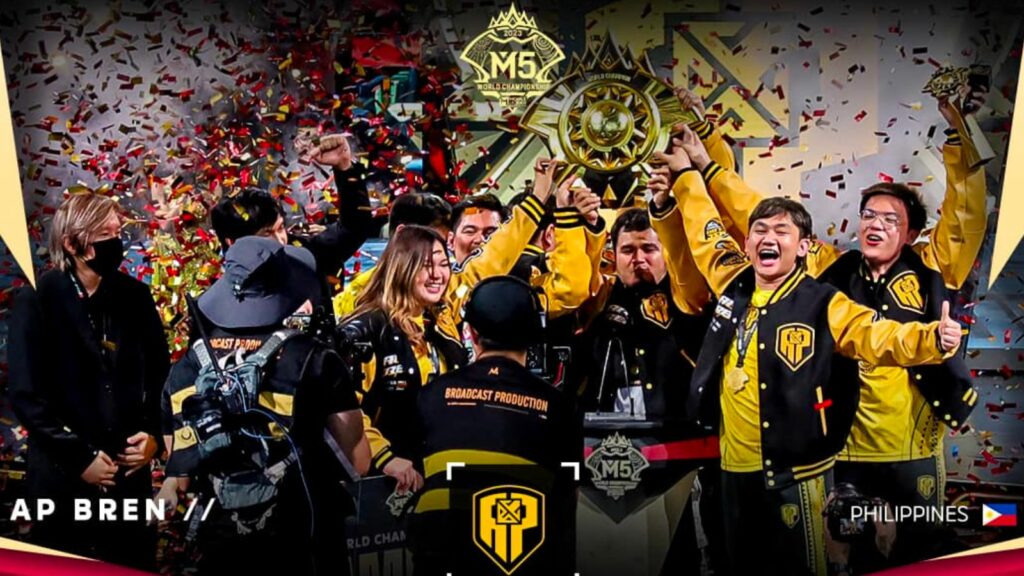
Photo: ONE Esports.
The tournament has produced memorable rivalries, championship-winning dynasties, dramatic grand finals, and some of the most recognizable personalities in mobile esports.
Its history also reveals how competitive gaming has developed in Southeast Asia, particularly in Indonesia and the Philippines.
However, the significance of the M Series extends beyond individual victories.
The competition has encouraged professional organizations to improve their training systems, created international opportunities for players, and helped demonstrate the commercial potential of mobile esports.
Understanding the M Series requires examining how the tournament began, which teams shaped its history, and why its influence continues to extend beyond the regions where Mobile Legends first became popular.
What Is the M Series World Championship?
The M Series World Championship is the international world championship tournament for Mobile Legends: Bang Bang, a five-versus-five multiplayer online battle arena game developed by Moonton.
Unlike domestic competitions such as MPL Indonesia or MPL Philippines, the M Series brings together qualified teams from multiple regions.
Its purpose is to determine a world champion through international competition.
Teams typically earn places through designated regional leagues, qualification tournaments, or other official pathways established for a particular edition.
The qualification system has evolved as the competitive ecosystem has expanded.
This means that the number of participating teams, regional allocations, and tournament stages should not be assumed to remain identical across every championship.
Despite these changes, the central objective remains consistent: identifying the team capable of defeating leading opponents from different competitive environments.
Why the M Series Was Created
Before the M Series, Mobile Legends already had a growing competitive community.
Local tournaments, regional leagues, and international events such as the Mobile Legends Southeast Asia Cup helped establish organized competition.
However, the ecosystem needed a recognizable world championship.
Domestic leagues could identify the strongest teams within individual countries, but they could not independently establish which organization was the best internationally.
The M Series provided that larger competitive objective.
It also created a shared annual milestone for fans, players, and professional organizations.
Regional titles remained important, but international success offered a different level of recognition.
For players, reaching the world championship became an important career achievement.
For organizations, the tournament provided opportunities to build international reputations and attract new audiences.
M1 World Championship 2019: The Beginning of a Global Tournament
The first M Series World Championship took place in Kuala Lumpur, Malaysia, in November 2019.
Known as M1, the tournament brought together teams from different regions to compete for the inaugural world title.
Indonesia became the central story of the competition.
EVOS Legends and RRQ Hoshi both reached the grand final, creating an all-Indonesian championship match.
The final was particularly meaningful because the two organizations already had a strong domestic rivalry.
EVOS Legends eventually defeated RRQ Hoshi 4–3 to become the first Mobile Legends world champion.
The result established Indonesia as an early international powerhouse.
It also showed that the competitive intensity of domestic rivalries could translate into compelling world championship matches.
M1 gave Mobile Legends esports a defining international event and established the foundation for future editions.
M2 World Championship: Bren Esports Makes History
The second M Series World Championship was held in Singapore in January 2021.
The tournament took place after the COVID-19 pandemic disrupted the international esports calendar.
Despite the difficult circumstances, M2 demonstrated that Mobile Legends could continue supporting major international competition.
Bren Esports of the Philippines emerged as champions.
The team defeated Myanmar’s Burmese Ghouls 4–3 in the grand final.
The victory marked the Philippines’ first M Series championship.
It also represented an important shift in the competitive landscape.
Indonesia had dominated the inaugural championship, but Philippine teams were now demonstrating that they could compete successfully at the highest level.
The M2 final also highlighted the importance of composure and adaptation during long championship series.
When two teams are closely matched, small decisions involving drafting, positioning, and objective control can determine the outcome.
M3 World Championship: Blacklist International’s Strategic Success
The M3 World Championship took place in Singapore in December 2021.
Blacklist International became world champions after defeating ONIC Philippines 4–0 in the grand final.
The tournament was significant because it highlighted the growing tactical sophistication of professional Mobile Legends.
Blacklist International became widely associated with its UBE, or Ultimate Bonding Experience, strategic approach.
The system emphasized coordinated team movement, positioning, and the ability to execute engagements around important objectives.
However, Blacklist’s success involved more than a single strategy.
The team demonstrated discipline, effective communication, and a strong understanding of how to respond to opponents.
M3 showed that professional Mobile Legends had developed beyond individual mechanical skill.
Teams increasingly required recognizable tactical identities supported by structured preparation.
M4 World Championship: ECHO Wins in Jakarta
The M4 World Championship was held in Jakarta, Indonesia, in January 2023.
Hosting the tournament in Indonesia brought the competition to one of Mobile Legends’ largest and most enthusiastic markets.
The grand final featured two Philippine organizations: ECHO and Blacklist International.
ECHO defeated Blacklist International 4–0 to claim the world championship.
The victory demonstrated how rapidly the competitive environment could evolve.
Blacklist entered the tournament with an established reputation, but ECHO successfully challenged its approach.
The result reinforced the importance of strategic preparation and the ability to adapt to opponents with recognizable strengths.
M4 also showed the significance of Southeast Asian fan communities to the international championship.
Even when teams from other regions were competing, Indonesia remained a major center of attention for the event.
M5 World Championship: AP.Bren Becomes a Two-Time Champion
The M5 World Championship took place in the Philippines in December 2023.
The grand final featured AP.Bren against Indonesia’s ONIC Esports.
AP.Bren won the championship after a dramatic seven-game series, defeating ONIC 4–3.
The result was historically significant.
The organization became the first to win two M Series world championships, having previously claimed M2 under the Bren Esports name.
M5 also reinforced the competitive rivalry between Indonesia and the Philippines.
ONIC entered the tournament as a major international contender, while AP.Bren represented the strength of the Philippine professional scene.
The final demonstrated how closely matched elite teams could be.
Across a long series, successful drafting, adaptation, and performance under pressure become essential.
For AP.Bren, the victory established an important place in Mobile Legends esports history.
M6 World Championship: Fnatic ONIC Philippines Takes the Title
The M6 World Championship was held in Kuala Lumpur, Malaysia, in December 2024.
Fnatic ONIC Philippines won the championship after defeating Team Liquid Indonesia 4–1 in the grand final.
The victory continued the remarkable success of Philippine teams in the M Series.
It also demonstrated how the professional ecosystem had developed through international partnerships, organizational investment, and roster management.
By M6, the tournament had become a well-established international competition.
Professional teams approached the event with sophisticated preparation, extensive strategic analysis, and significant experience against international opponents.
The championship reflected the growing maturity of Mobile Legends esports.
M7 World Championship: A New Chapter in the Competition
The M7 World Championship represented the next chapter of the tournament’s development, with Jakarta, Indonesia, selected as the host city for the championship scheduled in January 2026.
The return to Indonesia reflected the country’s importance to the Mobile Legends competitive ecosystem.
It also highlighted the tournament’s continuing connection with Southeast Asia, where professional leagues and fan communities have played a major role in its growth.
As the M Series expanded, competition organizers faced the challenge of balancing established regional powerhouses with opportunities for teams from developing markets.
The M7 edition belongs to that broader evolution of the championship.
Its final standings and championship result should be checked against the official tournament record before being added to a historical winners list.
M Series World Championship Winners
The following table summarizes the confirmed historical championship results from M1 through M6.
| Tournament | Year | Champion | Country | Runner-Up |
|---|---|---|---|---|
| M1 | 2019 | EVOS Legends | Indonesia | RRQ Hoshi |
| M2 | 2021 | Bren Esports | Philippines | Burmese Ghouls |
| M3 | 2021 | Blacklist International | Philippines | ONIC Philippines |
| M4 | 2023 | ECHO | Philippines | Blacklist International |
| M5 | 2023 | AP.Bren | Philippines | ONIC Esports |
| M6 | 2024 | Fnatic ONIC Philippines | Philippines | Team Liquid Indonesia |
The results reveal a striking pattern.
Indonesia won the inaugural M Series, while Philippine teams captured the next five championships through M6.
This dominance reflects the strength of the Philippine professional ecosystem, but it does not mean that other regions have stopped developing.
International competition continues to create opportunities for new contenders.
Why Philippine Teams Have Been So Successful
The Philippines’ success in the M Series is one of the most important competitive trends in Mobile Legends history.
Several factors have contributed to this performance.
Strong Domestic Competition
MPL Philippines provides a demanding environment where leading teams compete regularly.
High-quality domestic opposition encourages organizations to improve their strategies and preparation.
Coaching and Tactical Development
Philippine teams have demonstrated effective approaches to drafting, objective control, and coordinated team fighting.
Different championship-winning organizations have developed their own tactical identities.
International Experience
Repeated participation in major tournaments allows teams to encounter different playing styles.
This experience can improve preparation and decision-making under pressure.
Team Coordination
Professional Mobile Legends requires precise communication.
Successful teams must coordinate rotations, manage resources, and execute engagements together.
Individual talent remains important, but championship performance depends heavily on collective decision-making.
Indonesia’s Importance to the M Series
Although Philippine organizations dominated much of the championship’s early history after M1, Indonesia remains central to the M Series.
Indonesian teams have consistently contributed to the competition’s most recognizable rivalries.
Organizations such as EVOS, RRQ, ONIC, and Team Liquid Indonesia have helped attract international attention.
Indonesia also provides a large and enthusiastic audience.
Its supporters follow professional Mobile Legends through livestreams, social media, and live events.
The country’s importance is not measured only by championship victories.
Audience engagement, professional league development, sponsorship opportunities, and tournament hosting all contribute to its influence.
How the M Series Tournament Format Works
The M Series has used different tournament structures across its history.
Earlier editions commonly featured group stages followed by knockout competition.
Later editions introduced or expanded other formats designed to create more competitive matches.
For example, M5 and M6 included a Wild Card stage that offered additional qualification opportunities.
M6 also introduced a Swiss-format phase into its main tournament structure.
These changes reflected an effort to develop the competitive experience as the number of participating regions increased.
Regional Qualification
Teams usually qualify through designated regional competitions or official qualification pathways.
The exact allocation of places depends on the championship edition.
Wild Card Stage
The Wild Card provides an additional opportunity for selected teams to compete for places in the main event.
It can help broaden international representation.
Group or Swiss Stages
These stages determine which teams advance toward the knockout rounds.
Depending on the edition, teams may compete within groups or face opponents based on their evolving tournament records.
Knockout Stage
The knockout stage creates higher-pressure competition.
Teams must survive increasingly difficult matches to reach the grand final.
Grand Final
The grand final determines the world champion.
Longer series provide opportunities for tactical adjustments and can produce dramatic shifts in momentum.
Because tournament regulations change, the official format for each edition should be consulted rather than assuming every M Series uses the same system.
The M Series and the Growth of Professional Mobile Esports
The M Series has helped demonstrate that mobile games can support sophisticated professional competition.
For many years, international esports discussions focused heavily on PC and console titles.
Mobile Legends offered a different model.
Its accessibility allowed large communities to develop around smartphones, particularly in regions where dedicated gaming hardware could be expensive.
The M Series transformed that audience into an international spectator community.
Professional matches became major entertainment events supported by commentators, analysts, production crews, and commercial partners.
This development challenged the idea that serious esports competition required traditional gaming platforms.
How the M Series Influences Professional Players
Competing in the M Series can become a defining moment in a player’s career.
International tournaments expose players to stronger opponents, unfamiliar strategies, and greater public attention.
Successful performances can improve professional reputations.
Players may attract interest from other organizations or develop larger audiences through streaming and social media.
However, international recognition also creates pressure.
Expectations increase, and individual mistakes can attract significant public criticism.
Organizations must therefore consider player development, mental preparation, and long-term career support.
A successful esports ecosystem depends on the people competing within it, not only on tournament results.
Broadcasting, Viewership, and Global Audiences
Online broadcasting has been essential to the growth of the M Series.
Fans can watch matches without traveling to the host country.
Livestreaming platforms allow international audiences to follow tournaments through different language broadcasts and community coverage.
The championship has generated substantial interest across Southeast Asia, where Mobile Legends has a particularly strong following.
However, audience figures require careful interpretation.
Peak concurrent viewers, total views, watch hours, and unique viewers measure different aspects of engagement.
Statistics from different platforms or research providers may also use different methodologies.
For this reason, viewership comparisons should identify the specific metric and source rather than treating every reported figure as directly comparable.
Even without relying on a single headline number, the tournament’s growth demonstrates the importance of mobile esports within the wider competitive gaming industry.
The Economic Impact of the M Series
International esports tournaments involve more than prize money.
They create commercial opportunities for event organizers, professional teams, sponsors, broadcasters, and host destinations.
Major tournaments require production staff, technical equipment, venue operations, and marketing support.
Visitors attending live events may also spend money on accommodation, transportation, restaurants, and other services.
However, economic benefits should not be assumed automatically.
Event costs, sponsorship revenue, audience engagement, and local business participation all influence the overall impact.
For professional organizations, international success can increase visibility and commercial appeal.
Nevertheless, sustainable operations require more than occasional championship appearances.
Teams must manage player contracts, staffing costs, sponsorship relationships, and long-term development.
The Cultural Impact of Mobile Legends World Championships
One of the most distinctive features of the M Series is the strength of its regional fan communities.
Supporters often identify strongly with teams representing their countries.
Matches between Indonesian and Philippine organizations can generate considerable attention because of the competitive history between the two regions.
However, international esports also creates opportunities for cross-cultural engagement.
Fans encounter teams, players, and commentators from different countries.
Professional organizations build international audiences, while players become recognizable beyond their domestic markets.
The M Series has therefore contributed to a shared esports culture centered on Mobile Legends.
Why Global Expansion Remains Challenging
Although the M Series is an international championship, Mobile Legends does not have equal competitive strength or popularity in every region.
Southeast Asia remains particularly important to its professional ecosystem.
Expanding into new markets requires sustained investment in local communities and competitive infrastructure.
Regional tournaments must provide meaningful opportunities for emerging organizations.
Players need access to structured development and competitive experience.
Broadcasters must also understand local audiences.
Simply adding more countries to a championship does not automatically create strong professional ecosystems.
Long-term global growth depends on building competitive depth and audience engagement outside established markets.
The Future of the M Series World Championship
The M Series has evolved significantly since its first edition in 2019.
Its tournament structure has changed, international participation has expanded, and professional teams have become increasingly sophisticated.
Future development may involve further changes to qualification systems, regional representation, and tournament formats.
However, several priorities are likely to remain important.
Competitive integrity must be protected through clear regulations and consistent enforcement.
Emerging regions need opportunities to improve.
Professional organizations require sustainable financial models.
Players need support that extends beyond immediate competitive results.
And audiences must continue receiving compelling, accessible broadcasts.
The championship’s long-term success will depend on balancing these needs while preserving the competitive identity that made it popular.
Frequently Asked Questions About the M Series World Championship
What is the M Series World Championship?
It is the international world championship tournament for Mobile Legends: Bang Bang.
When did the M Series begin?
The first M Series World Championship, M1, took place in 2019.
Who won the first Mobile Legends World Championship?
EVOS Legends of Indonesia won M1 in 2019.
Who won M2?
Bren Esports of the Philippines won M2 in January 2021.
Who won M3?
Blacklist International of the Philippines won M3 in December 2021.
Who won M4?
ECHO of the Philippines won M4 in January 2023.
Who won M5?
AP.Bren of the Philippines won M5 in December 2023.
Who won M6?
Fnatic ONIC Philippines won M6 in December 2024.
Why were M2 and M3 both held in 2021?
The international competition calendar was affected by the COVID-19 pandemic. M2 took place in January 2021, while M3 followed in December of the same year.
Why were M4 and M5 both held in 2023?
M4 took place in January 2023, while M5 was held in December 2023.
Which country won the most M Series titles through M6?
The Philippines won five championships from M2 through M6, while Indonesia won M1.
What is the difference between MPL and the M Series?
MPL competitions are regional professional leagues, while the M Series brings together qualified teams for an international world championship.
What is the Wild Card stage?
The Wild Card is an additional qualification stage used in certain editions to determine which teams advance to the main championship.
Why is the M Series important to esports?
It demonstrates the international competitive potential of mobile gaming and provides a world championship platform for professional Mobile Legends teams.
Conclusion: A World Championship That Changed Mobile Esports
The M Series World Championship has become one of the defining competitions in Mobile Legends esports.
Since M1 in 2019, the tournament has provided an international stage for professional organizations and helped establish recognizable championship traditions.
EVOS Legends introduced the world championship era with Indonesia’s historic victory.
Philippine organizations subsequently built an impressive record through Bren Esports, Blacklist International, ECHO, AP.Bren, and Fnatic ONIC Philippines.
These results shaped regional rivalries and encouraged teams to raise their competitive standards.
However, the M Series’ importance extends beyond its list of winners.
It has helped strengthen professional mobile esports, create international opportunities, and connect audiences across different countries.
The challenge for the future is ensuring that the championship continues to grow while supporting competitive balance, regional development, and long-term sustainability.
From its first grand final in Kuala Lumpur to its development into a major international esports competition, the M Series demonstrates how a mobile game can build a lasting world championship tradition.
Leave a Reply