The History of Formula 1: From 1950 to the Modern Era
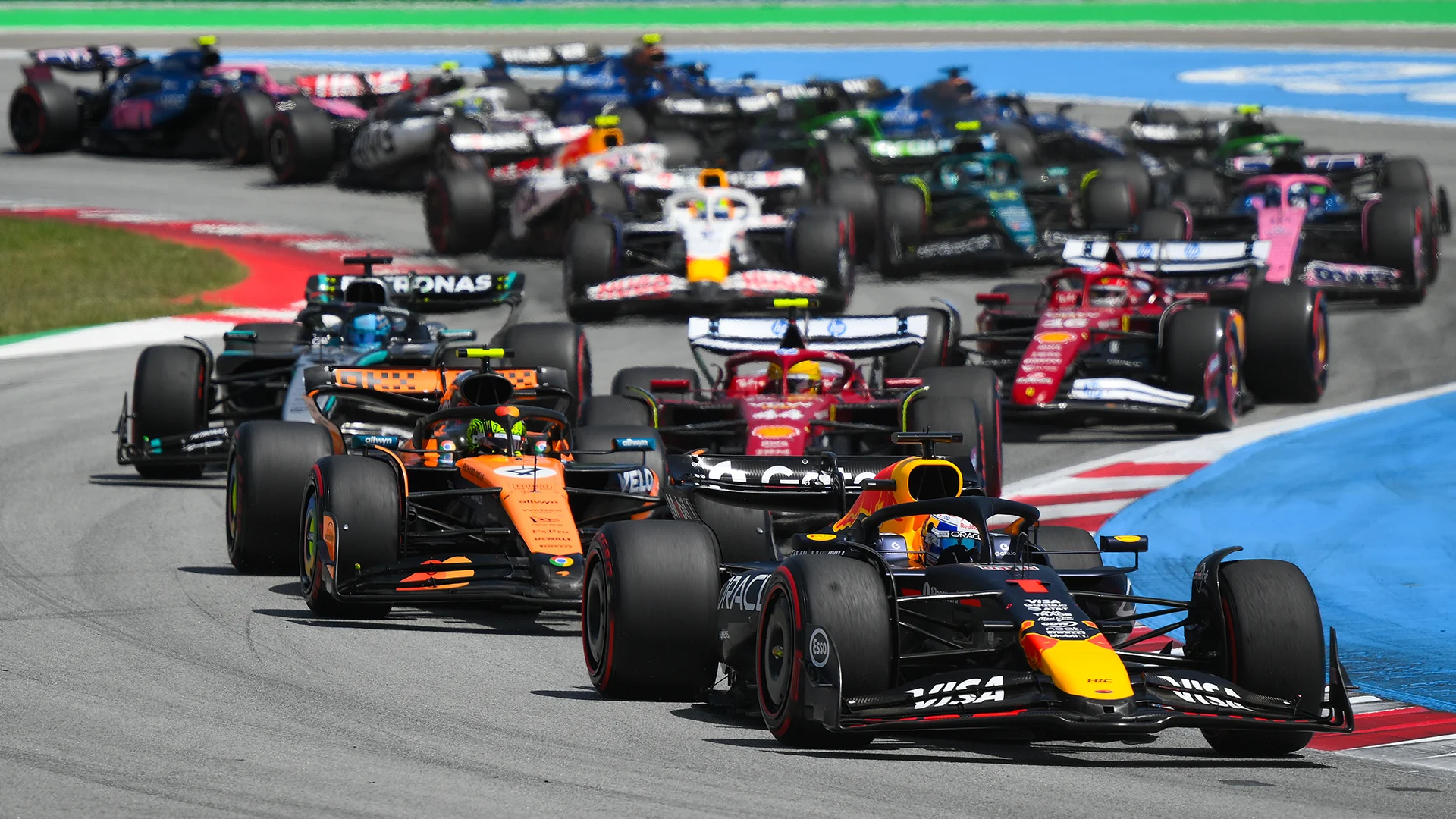
Image source: Formula1.com.
The History of Formula 1: From 1950 to the Modern Era
Formula 1 has never been just about driving faster than everyone else. Since the first Formula One World Championship in 1950, the sport has represented a continuous struggle between human ambition, engineering innovation, financial power, and the limits of physical endurance.
The cars have changed beyond recognition. Circuits have evolved, safety standards have improved, and the championship has expanded into a global sporting phenomenon.
Yet the fundamental appeal remains familiar: the world’s most talented drivers competing in machines designed to operate at the edge of what technology allows.
Understanding the history of Formula 1 means looking beyond championship statistics. It requires examining how racing philosophies changed, how tragedy influenced safety regulations, and how legendary rivalries shaped the identity of the sport.
1950: The Beginning of the Formula One World Championship
The first official Formula One World Championship season began in 1950, although Grand Prix motor racing had existed for decades before the championship was established.
The inaugural championship race took place at Silverstone in Great Britain on May 13, 1950.
Giuseppe Farina won the race driving an Alfa Romeo, beginning a season that would ultimately make him the first Formula One World Drivers’ Champion.
The early championship looked very different from today’s competition. Cars featured narrow tires, exposed wheels, and limited aerodynamic development.
Drivers competed without many of the protective systems now considered essential. Racing circuits frequently had minimal barriers, dangerous roadside obstacles, and limited medical infrastructure.
Despite these differences, the basic competitive structure was already recognizable: drivers and manufacturers attempting to outperform one another across a season of major races.
Juan Manuel Fangio and the First Great Formula 1 Dynasty
One of the defining figures of Formula 1’s first decade was Juan Manuel Fangio.
The Argentine driver became famous for his precision, mechanical understanding, and ability to adapt to different racing cars.
Fangio won five World Drivers’ Championships in 1951, 1954, 1955, 1956, and 1957.
His achievements were particularly remarkable because he won titles with several manufacturers, including Alfa Romeo, Mercedes-Benz, Ferrari, and Maserati.
During an era when mechanical failures and serious accidents were common, Fangio combined exceptional speed with careful race management.
His five championships remained the Formula 1 record for decades until Michael Schumacher surpassed it in 2003.
The 1960s: Formula 1 Enters a New Engineering Era
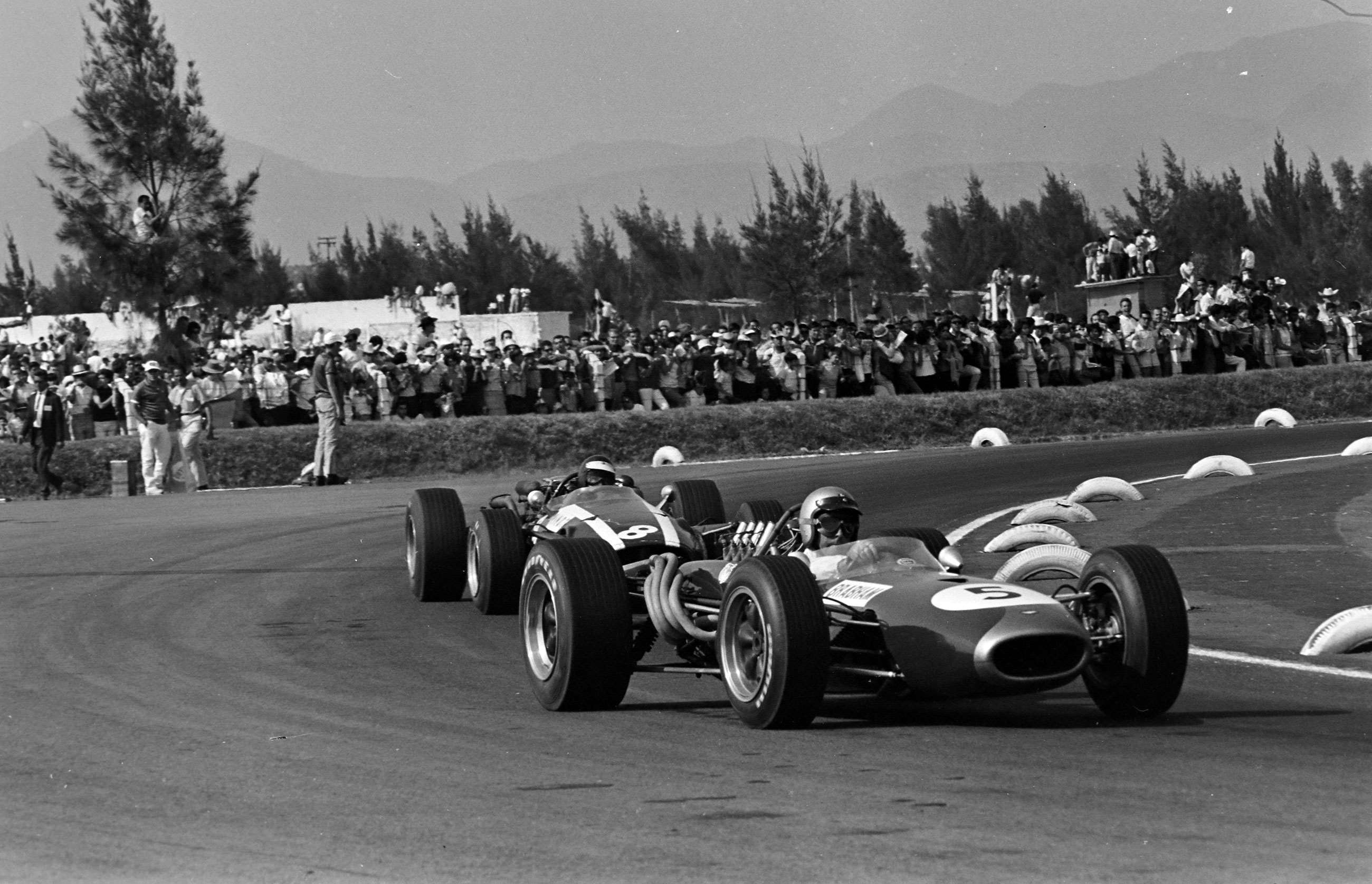
Image source: Goodwood.
During the 1960s, Formula 1 experienced major technical changes that transformed car design.
One of the most important developments was the widespread adoption of rear-engine layouts.
Although rear-engine racing cars existed earlier, Cooper’s championship success in 1959 and 1960 helped establish the configuration as the competitive standard.
Positioning the engine behind the driver improved weight distribution and handling characteristics compared with traditional front-engine designs.
Lotus, led by Colin Chapman, became especially influential. Chapman’s philosophy emphasized reducing weight, improving chassis design, and finding unconventional engineering solutions.
The Lotus 25 helped popularize the monocoque chassis, providing structural advantages over earlier designs.
Jim Clark became one of the era’s defining drivers, winning the World Championship in 1963 and 1965.
Jackie Stewart and the Fight for Driver Safety
As Formula 1 became faster, concerns about driver safety became increasingly difficult to ignore.
Jackie Stewart emerged as one of the most important advocates for change.
The Scottish driver won three World Championships in 1969, 1971, and 1973. However, his influence extended beyond his achievements on the track.
Stewart repeatedly criticized inadequate circuit barriers, poor medical preparation, and dangerous track conditions.
His campaigning helped push Formula 1 toward higher safety standards.
Over time, improvements in circuit design, medical response, protective equipment, and vehicle construction helped change the sport.
The 1970s: Niki Lauda, James Hunt, and the Human Side of Racing
The 1970s produced some of the most memorable personalities and rivalries in Formula 1 history.
Niki Lauda became known for his analytical approach, technical feedback, and disciplined driving.
James Hunt represented a contrasting personality, combining aggressive racing with a more unconventional public image.
Their rivalry reached its peak during the 1976 season.
Lauda suffered a severe accident at the Nürburgring, sustaining life-threatening injuries. Remarkably, he returned to racing only weeks later.
Hunt eventually won the 1976 World Championship by a single point.
The season became one of Formula 1’s most famous stories because it combined sporting competition with extraordinary personal resilience.
Ground Effect Changes the Rules of Aerodynamics
Another major transformation emerged during the late 1970s through the development of ground-effect aerodynamics.
Lotus engineers explored ways to use airflow beneath the car to generate additional downforce.
The Lotus 78 and Lotus 79 became important examples of this approach.
Ground effect allowed cars to corner at higher speeds by increasing aerodynamic grip.
However, changes in ride height and airflow could produce sudden losses of downforce, making cars difficult to control.
The development of ground effect illustrated a recurring pattern in Formula 1 history: engineers discover a performance advantage, competitors attempt to improve it, and governing bodies eventually respond with new regulations.
The 1980s: Turbocharged Engines Transform Formula 1
Turbocharged engines became one of the defining technologies of Formula 1 during the 1980s.
Renault helped pioneer the modern turbo era after introducing its turbocharged Formula 1 car in 1977.
During the following decade, turbo technology became increasingly competitive.
Turbo lag, fuel consumption, reliability, and heat management created significant engineering challenges.
Drivers needed to understand how power delivery affected traction and corner exits.
Turbocharged engines were banned from Formula 1 beginning in 1989, temporarily returning the championship to naturally aspirated power units.
Ayrton Senna and Alain Prost: Formula 1’s Defining Rivalry

Few rivalries have shaped Formula 1’s public identity as strongly as the competition between Ayrton Senna and Alain Prost.
Both drivers possessed exceptional talent, but their approaches to racing were often portrayed as contrasting philosophies.
Prost became known for precision, consistency, and strategic intelligence.
Senna was celebrated for extraordinary qualifying speed, commitment, and intense competitive determination.
The rivalry became especially dramatic when both drove for McLaren.
During the 1988 season, McLaren won 15 of the 16 championship races. Senna secured his first World Championship that year.
Controversial collisions at Suzuka in 1989 and 1990 became defining moments in their rivalry.
Prost eventually won four World Championships, while Senna claimed three.
1994: The Tragedy That Changed Formula 1 Safety
The 1994 San Marino Grand Prix remains one of the darkest weekends in Formula 1 history.
Roland Ratzenberger died during qualifying, and Ayrton Senna suffered a fatal accident during the race.
The tragedies shocked the motorsport community and intensified demands for improved safety.
Formula 1 introduced and accelerated numerous changes in the years that followed.
These included modifications to car design, circuit safety, crash protection, and medical procedures.
Safety became an increasingly central part of technical regulation.
Michael Schumacher and Ferrari’s Dominant Era
Michael Schumacher became one of the most influential drivers in Formula 1 history.
He won his first two World Championships with Benetton in 1994 and 1995.
After joining Ferrari in 1996, Schumacher helped transform the team into a dominant championship organization.
Working with key figures including Jean Todt, Ross Brawn, and Rory Byrne, Ferrari developed a highly effective combination of engineering, race strategy, and organizational discipline.
Schumacher won five consecutive World Drivers’ Championships from 2000 through 2004.
His seventh title in 2004 established a record that Lewis Hamilton would later equal.
The 2000s: New Champions and Changing Competition
Following Ferrari’s dominant period, Formula 1 entered a more competitive phase.
Fernando Alonso won consecutive World Championships with Renault in 2005 and 2006.
Kimi Räikkönen won the 2007 championship with Ferrari after a closely contested season.
Lewis Hamilton secured his first title with McLaren in 2008.
Jenson Button followed with a remarkable championship victory for Brawn GP in 2009.
The period demonstrated how regulation changes and engineering innovation could rapidly alter the competitive order.
Red Bull Racing and Sebastian Vettel’s Four Championships
Red Bull Racing became the dominant force in Formula 1 between 2010 and 2013.
Sebastian Vettel won four consecutive World Drivers’ Championships during this period.
The team’s success was closely associated with the aerodynamic expertise of Adrian Newey and strong organizational leadership.
Red Bull developed cars that were particularly effective at generating aerodynamic downforce.
However, a major technical change was approaching. The introduction of hybrid power-unit regulations in 2014 would transform the championship again.
2014: Formula 1 Enters the Turbo-Hybrid Era
In 2014, Formula 1 introduced a new generation of turbocharged V6 hybrid power units.
These systems combined internal combustion engines with sophisticated energy recovery technology.
Teams needed to manage electrical energy deployment, fuel efficiency, thermal performance, and complex power-unit integration.
Mercedes adapted particularly well to the new regulations.
The team won eight consecutive World Constructors’ Championships from 2014 through 2021.
Lewis Hamilton won six Drivers’ Championships with Mercedes during that period, adding to his earlier title with McLaren.
Nico Rosberg won the 2016 championship after an intense season-long contest.
Lewis Hamilton and the Modern Definition of Greatness
Lewis Hamilton became one of the most successful drivers in Formula 1 history.
His seven World Drivers’ Championships equaled Michael Schumacher’s record.
Hamilton also surpassed Schumacher’s career records for Grand Prix victories and pole positions.
His achievements reflected exceptional consistency across multiple regulation eras.
Hamilton’s driving combined race pace, tire management, adaptability, and strong performances in changing weather conditions.
His career also influenced Formula 1 beyond competition through his advocacy concerning diversity and representation in motorsport.
The 2021 Championship: Hamilton Versus Verstappen
The 2021 season produced one of the most dramatic championship battles in modern Formula 1.
Lewis Hamilton and Max Verstappen competed throughout the year, frequently exchanging victories and championship momentum.
The title was decided at the final race in Abu Dhabi.
Verstappen won the race and secured his first World Drivers’ Championship following a controversial late safety-car procedure.
The handling of that procedure became the subject of extensive scrutiny and subsequent regulatory changes.
The season marked a major transition in the championship’s competitive landscape.
2022: Ground Effect Returns to Formula 1
Formula 1 introduced major aerodynamic regulations in 2022.
The new rules placed greater emphasis on generating downforce through the floor of the car.
One objective was to reduce the aerodynamic disruption experienced by cars following closely behind another competitor.
However, teams encountered new engineering challenges, including porpoising, an aerodynamic phenomenon involving repeated vertical movement.
Red Bull developed a highly competitive car, helping Max Verstappen win the 2022 and 2023 World Drivers’ Championships.
In 2023, Red Bull won 21 of the 22 championship races, demonstrating an exceptional level of dominance.
How Formula 1 Safety Has Evolved
One of the most important differences between early Formula 1 and the modern championship is the level of safety protection.
Modern cars feature advanced carbon-fiber survival cells, sophisticated crash structures, improved fire protection, and extensive impact testing.
The introduction of the Halo cockpit protection device in 2018 represented a particularly visible development.
The Halo was initially controversial among some fans and drivers because of its appearance.
However, it has since been credited with providing important protection in several serious incidents.
Medical response systems and circuit safety standards have also improved significantly.
Technology: Why Formula 1 Is More Than a Racing Championship
Formula 1 has long served as a testing ground for advanced engineering ideas.
Teams compete to improve aerodynamics, materials, energy management, braking systems, and vehicle performance.
Modern cars rely on extensive simulation, wind-tunnel development, computational fluid dynamics, and detailed data analysis.
Engineers monitor large amounts of information during practice sessions and races.
They use this data to evaluate tire performance, fuel management, aerodynamic behavior, and strategic decisions.
Formula 1’s financial regulations, including the cost cap introduced in 2021, were designed partly to limit certain spending differences between teams.
The Global Expansion of Formula 1
Formula 1 began as a championship heavily centered on European racing traditions.
Over time, it expanded into a global competition.
Grands Prix have been held across Europe, Asia, the Americas, the Middle East, and Oceania.
Television coverage, digital media, and documentary storytelling have contributed to its popularity.
The Netflix series Drive to Survive, first released in 2019, became an important part of Formula 1’s modern media presence.
However, global expansion also raises questions about travel demands, environmental impact, scheduling, and the preservation of traditional circuits.
Formula 1 and the Challenge of Sustainability
Environmental sustainability has become an increasingly important issue for international motorsport.
Formula 1 faces the challenge of reducing its environmental impact while maintaining the performance and technological appeal that define the championship.
The sport has pursued initiatives involving fuel technology, logistics, and operational emissions.
Its 2026 technical regulations introduce a new generation of power units designed around a substantially greater contribution from electrical energy.
The regulations also specify the use of advanced sustainable fuels.
However, the environmental impact of Formula 1 extends beyond the cars themselves.
International travel, freight transportation, event infrastructure, and manufacturing all contribute to the championship’s overall footprint.
The 2026 Regulations and the Next Chapter of Formula 1
The 2026 season marks another major regulatory transition for Formula 1.
The new technical framework introduces significant changes to both chassis and power-unit design.
Power units place greater emphasis on electrical energy while retaining turbocharged internal combustion engines.
Cars also incorporate new aerodynamic concepts intended to balance efficiency, performance, and racing quality.
Manufacturers must balance reliability, energy management, aerodynamic efficiency, and overall vehicle performance.
The transition creates opportunities for established competitors and organizations attempting to improve their position.
It also continues a long-standing Formula 1 tradition: every major technical reset introduces the possibility of a new competitive order.
What Makes Formula 1 Different From Other Motorsports?
Formula 1 occupies a distinctive position in global motorsport because of its combination of technical regulation, international competition, and manufacturer investment.
Teams design and develop highly specialized cars within a demanding regulatory framework.
Drivers must manage tires, braking, energy deployment, race strategy, and changing track conditions.
Race outcomes depend on more than outright speed.
Weather, pit-stop timing, tire degradation, safety cars, and mechanical reliability can all influence the result.
The championship also rewards consistency across an entire season.
The Greatest Drivers in Formula 1 History
Comparing drivers from different eras is difficult because machinery, regulations, race calendars, and safety conditions have changed considerably.
Nevertheless, several names remain central to discussions about Formula 1 greatness.
Juan Manuel Fangio
Fangio established the early championship standard with five world titles and exceptional success across different manufacturers.
Jim Clark
Clark became renowned for his natural speed, smooth driving, and technical versatility during the 1960s.
Jackie Stewart
Stewart combined three championships with an influential campaign for improved driver safety.
Niki Lauda
Lauda’s three championships, technical intelligence, and remarkable recovery from his 1976 accident made him one of the sport’s most respected figures.
Alain Prost
Prost won four championships and became famous for his analytical approach to race management.
Ayrton Senna
Senna’s extraordinary qualifying performances, three championships, and intense rivalry with Prost established an enduring legacy.
Michael Schumacher
Schumacher won seven world titles and helped Ferrari establish one of the most successful periods in championship history.
Lewis Hamilton
Hamilton matched Schumacher’s seven championships while setting records for Grand Prix victories and pole positions.
Max Verstappen
Verstappen became a defining driver of the modern era through aggressive racecraft, technical consistency, and sustained championship success with Red Bull.
Frequently Asked Questions About Formula 1 History
When did Formula 1 officially begin?
The Formula One World Drivers’ Championship began in 1950, with its first race held at Silverstone on May 13.
Who won the first Formula 1 World Championship?
Giuseppe Farina won the inaugural World Drivers’ Championship in 1950 while driving for Alfa Romeo.
Who was the first dominant Formula 1 champion?
Juan Manuel Fangio became the first driver to establish a major championship dynasty, winning five world titles during the 1950s.
Why is Ayrton Senna so famous?
Senna is remembered for his extraordinary driving ability, three World Championships, rivalry with Alain Prost, and lasting influence on Formula 1.
How many Formula 1 championships did Michael Schumacher win?
Michael Schumacher won seven World Drivers’ Championships: two with Benetton and five with Ferrari.
How many championships has Lewis Hamilton won?
Lewis Hamilton has won seven World Drivers’ Championships, equaling Michael Schumacher’s record.
When did Formula 1 introduce hybrid engines?
The modern turbo-hybrid power-unit era began in 2014, introducing 1.6-liter turbocharged V6 engines with advanced energy recovery systems.
What is ground effect in Formula 1?
Ground effect uses airflow beneath a racing car to generate downforce, increasing aerodynamic grip and cornering performance.
When was the Halo introduced?
The Halo cockpit protection system became mandatory in Formula 1 in 2018.
What changed in Formula 1 for 2026?
The 2026 technical regulations introduced major changes to chassis aerodynamics and hybrid power units, with increased electrical contribution and advanced sustainable fuel requirements.
Conclusion: A Championship Built on Constant Evolution
The history of Formula 1 is ultimately a story of adaptation.
The championship began in 1950 with relatively simple racing machines, dangerous circuits, and drivers who accepted extraordinary personal risks.
Over the following decades, engineering innovation transformed the cars, safety reforms reshaped the sport, and legendary rivalries captured the attention of audiences around the world.
Juan Manuel Fangio established the early standard for championship excellence.
Jim Clark, Jackie Stewart, Niki Lauda, Ayrton Senna, Alain Prost, Michael Schumacher, Lewis Hamilton, and Max Verstappen each helped define different periods of the championship.
Meanwhile, manufacturers and engineers continually changed what a Formula 1 car could achieve.
From rear-engine designs and ground-effect aerodynamics to turbocharged engines and modern hybrid technology, every generation has introduced new possibilities and challenges.
Yet Formula 1 still revolves around the same essential question that defined its earliest races: who can combine the best driver, the strongest team, and the most effective machine?
As the championship enters another technical era, that question remains as relevant as it was at Silverstone in 1950.
Leave a Reply