Ayrton Senna: The Life and Legacy of a Formula 1 Legend
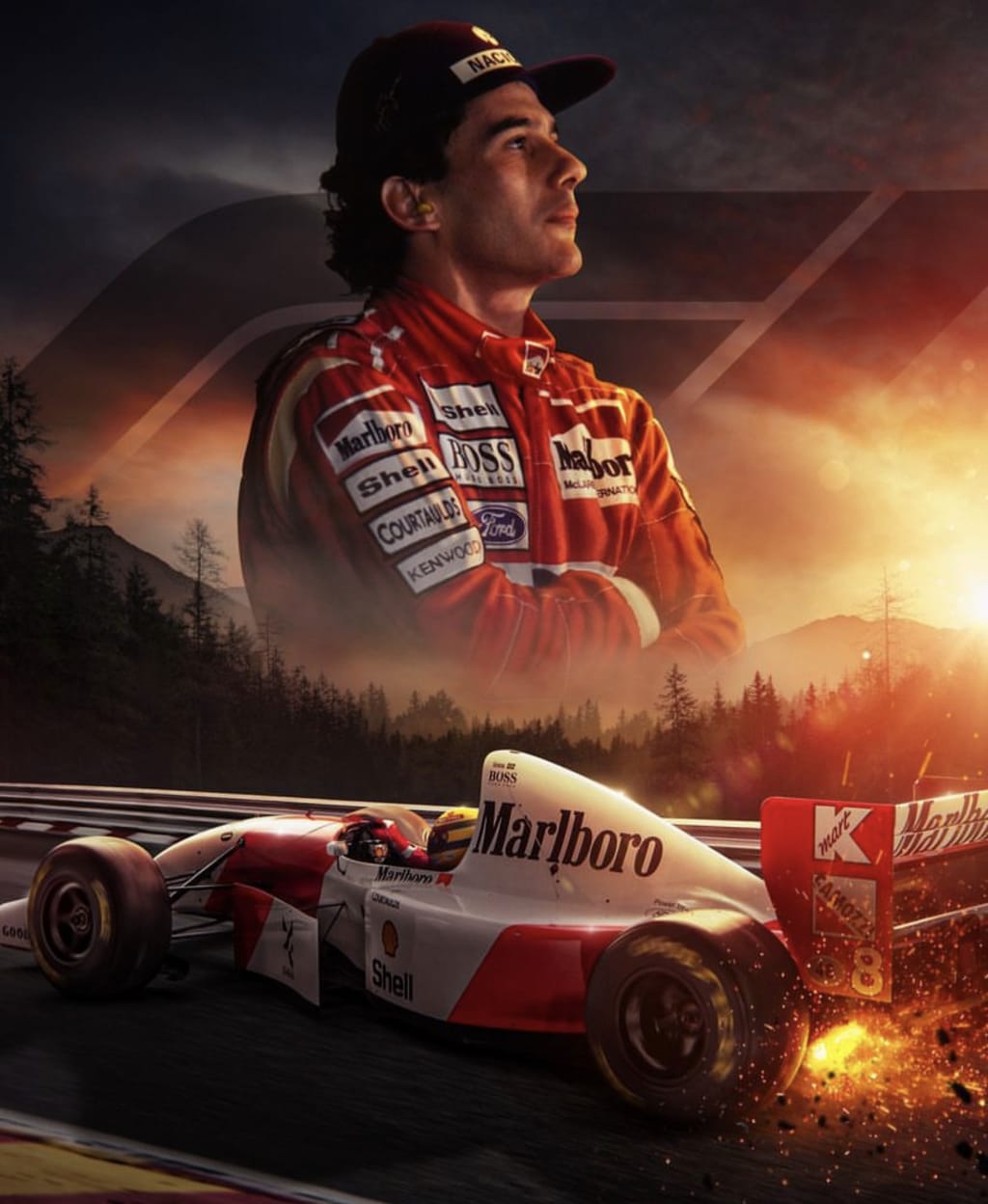
He was also a complicated figure. His determination sometimes led to controversial decisions, particularly during his rivalry with Alain Prost. His career demonstrated both the brilliance and the dangers of an era when Formula 1 was still confronting major safety problems.
To understand Ayrton Senna’s legacy, it is necessary to look beyond his three world championships and examine the journey that made him such an influential sporting figure.
Early Life: A Racing Passion Born in Brazil
Ayrton Senna da Silva was born on March 21, 1960, in São Paulo, Brazil.
He grew up in a financially comfortable family and developed an interest in cars and mechanical equipment at an early age.
His father encouraged his enthusiasm for motorsport, and Senna began driving go-karts as a child.
Karting became the foundation of his racing education.
Unlike Formula 1, where car development and team resources can create enormous performance differences, karting placed particular emphasis on driving precision, racecraft, and consistency.
Senna quickly developed an obsession with improving his technique.
He studied racing lines, braking points, and the behavior of his equipment. Even as a young competitor, he treated racing as something that required complete concentration.
He won the South American Kart Championship in 1977 and competed internationally, including at the Karting World Championship.
Although he never won the world karting title, those experiences helped prepare him for the demanding European racing environment.
Moving to Europe and Climbing the Racing Ladder
Like many ambitious drivers of his generation, Senna understood that a career in Formula 1 would probably require success in European junior championships.
He moved to Britain and began competing in single-seater racing.
In 1981, he won the British Formula Ford 1600 championship.
After briefly returning to Brazil and reconsidering his future, he continued racing in Europe.
He won the British Formula Ford 2000 championship in 1982 and advanced to British Formula 3 in 1983.
His Formula 3 campaign became an important turning point.
Senna faced strong competition from Martin Brundle, and their championship battle tested his consistency as well as his speed.
Senna ultimately secured the title, strengthening his reputation as one of the most promising young drivers in international motorsport.
By the end of 1983, Formula 1 teams were paying attention.
1984: Ayrton Senna Makes His Formula 1 Debut
Senna entered Formula 1 in 1984 with Toleman, a relatively small team that did not possess the resources of the championship’s leading organizations.
His first season was not defined by race victories.
Instead, it demonstrated how much difference an exceptional driver could make in a less competitive car.
The defining moment came at the Monaco Grand Prix.
Heavy rain transformed the narrow street circuit into an extremely difficult racing environment.
Visibility was poor, grip was limited, and even experienced drivers struggled to maintain control.
Senna, however, appeared unusually comfortable.
Starting from 13th position, he moved through the field and began closing on race leader Alain Prost.
The race was stopped after 31 laps because of the conditions, leaving Senna classified second.
The decision to stop the race became a subject of debate, but the performance itself was impossible to ignore.
Senna had shown that he could compete with established Formula 1 stars despite driving inferior machinery.
His reputation as an extraordinary wet-weather driver began to take shape.
The Lotus Years: Discovering His Qualifying Brilliance
Senna joined Lotus for the 1985 season.
The move gave him a more competitive car and greater opportunities to demonstrate his speed.
At the Portuguese Grand Prix in Estoril, he secured his first Formula 1 victory.
The race took place in difficult wet conditions, and Senna delivered a dominant performance.
He controlled the race and finished more than a minute ahead of second-place Michele Alboreto.
The victory reinforced a growing belief that Senna possessed a rare ability to understand changing levels of grip.
During his three seasons with Lotus, he won six Grands Prix and became especially famous for his qualifying performances.
His ability to extract speed over a single lap was often remarkable.
Senna approached qualifying with extraordinary intensity, searching for braking points and cornering speeds that other drivers sometimes considered unrealistic.
However, the Lotus years also exposed a limitation that would become important in his career.
Individual brilliance was not enough to win a championship without a consistently competitive and reliable car.
For Senna to challenge for the world title, he needed a team capable of matching his ambitions.
McLaren and the Beginning of a Championship Era
In 1988, Senna joined McLaren, where he became teammates with Alain Prost.
The partnership brought together two of the strongest drivers in Formula 1.
Prost was already a two-time world champion, known for his calculated approach and ability to manage races with exceptional precision.
Senna was younger, intensely aggressive, and often willing to take greater risks in pursuit of speed.
The McLaren MP4/4, powered by Honda, was one of the most dominant cars in Formula 1 history.
McLaren won 15 of the 16 races during the 1988 season.
Senna claimed eight victories, while Prost won seven.
Under the championship’s points rules at the time, only a driver’s best 11 results counted toward the final standings.
Senna emerged as world champion, securing his first Formula 1 title.
It was a remarkable achievement, but it also marked the beginning of one of motorsport’s most famous rivalries.
Senna vs. Prost: Formula 1’s Defining Rivalry
The rivalry between Ayrton Senna and Alain Prost became central to Formula 1 during the late 1980s and early 1990s.
Both drivers were exceptionally talented, but their personalities and racing philosophies were very different.
Prost preferred a measured approach, often considering the broader championship picture rather than pursuing unnecessary risks.
Senna approached competition with an intensity that could make compromise difficult.
Their relationship deteriorated as they competed for the same championships.
The 1989 Japanese Grand Prix
At Suzuka in 1989, Senna and Prost collided while fighting for the lead.
Prost retired, while Senna continued after receiving assistance and changing his damaged front wing.
Senna crossed the finish line first but was subsequently disqualified for failing to follow the required course after the collision.
The decision confirmed Prost as world champion and intensified an already bitter dispute.
The 1990 Japanese Grand Prix
One year later, the championship again reached a decisive moment at Suzuka.
Senna, now driving for McLaren against Prost at Ferrari, collided with his rival at the first corner.
Both cars retired, and Senna secured his second world championship.
The incident remains one of the most controversial moments of his career.
Senna later acknowledged that the collision had been deliberate, influenced by his anger over the circumstances surrounding pole position and the previous year’s championship.
For admirers, his determination was part of what made him extraordinary.
For critics, incidents such as Suzuka 1990 demonstrated how his uncompromising attitude could cross an important sporting boundary.
Both perspectives are necessary to understand the complete story.
1991: Senna Wins His Third World Championship
The 1991 season brought Senna his third Formula 1 world championship.
Driving for McLaren-Honda, he began the season with four consecutive victories.
His early advantage proved crucial as Williams became increasingly competitive.
Senna finished the season with seven wins and secured the championship ahead of Nigel Mansell.
One victory from that year carried particular emotional significance.
The 1991 Brazilian Grand Prix
Senna had already become a world champion, but he had never won his home Grand Prix.
At Interlagos in 1991, he finally achieved that ambition.
The closing stages were extremely difficult because his McLaren developed gearbox problems.
He was left struggling with limited gear selection and had to endure enormous physical strain to keep the car moving quickly enough.
When he crossed the finish line, the victory represented far more than another championship result.
It was a deeply personal achievement in front of Brazilian supporters.
His emotional reaction became one of the defining images of his career.
Why Was Ayrton Senna So Fast in the Rain?
Senna’s reputation as a wet-weather specialist remains one of the most celebrated aspects of his driving.
His performances at Monaco in 1984, Portugal in 1985, and Donington Park in 1993 are frequently cited as examples.
Driving in the rain requires more than courage.
Grip changes constantly, braking distances increase, and the driver must identify areas of the circuit where traction remains available.
Senna possessed exceptional sensitivity to the behavior of his car.
He could recognize subtle changes in grip and adjust his driving accordingly.
His karting background may have contributed to that ability, but it was also the result of years of practice and intense concentration.
The opening lap of the 1993 European Grand Prix at Donington Park remains particularly famous.
In wet conditions, Senna moved from fifth position into the lead during the opening lap.
He went on to win the race in a performance widely regarded as one of the finest of his career.
Monaco: The Circuit That Defined Senna’s Precision
Monaco was another place where Senna’s extraordinary control became apparent.
The narrow street circuit leaves very little room for error.
Barriers sit close to the racing line, overtaking is difficult, and a minor mistake can end a driver’s race.
Senna won the Monaco Grand Prix six times, a record that established him as one of the event’s greatest specialists.
His qualifying lap in 1988 became especially famous.
He secured pole position by more than 1.4 seconds over teammate Alain Prost.
Senna later described experiencing an unusually intense state of concentration during that session.
However, the weekend also illustrated the dangers of pushing beyond the limit.
While leading the race comfortably, Senna crashed and retired.
The contrast between his extraordinary qualifying performance and his race-ending mistake captured something essential about his career.
His pursuit of perfection produced breathtaking achievements, but it sometimes came at a cost.
The Difficult Final Years at McLaren
After winning the 1991 championship, Senna faced increasingly strong competition from Williams.
Williams developed highly advanced cars that dominated much of the 1992 and 1993 seasons.
Senna remained capable of spectacular individual performances, but McLaren could not consistently match its rival’s technical advantage.
His five victories in 1993 demonstrated that he was still one of the strongest drivers in Formula 1.
Among them was his remarkable performance at Donington Park.
Yet the championship remained out of reach.
Senna eventually decided to join Williams for 1994.
The move appeared to offer another opportunity to fight for the world championship.
Instead, it became the final chapter of his racing career.
1994: Ayrton Senna Joins Williams
Senna entered the 1994 season driving the Williams FW16.
The team had won the previous two Drivers’ Championships with Nigel Mansell and Alain Prost.
Expectations were therefore extremely high.
However, major regulation changes had removed several electronic driver-assistance systems, and the new Williams proved difficult to handle.
Senna secured pole position at the opening two races but failed to finish either event.
Michael Schumacher won both races and established an early championship advantage.
The third round took Formula 1 to Imola for the San Marino Grand Prix.
It would become one of the darkest weekends in the sport’s history.
The 1994 San Marino Grand Prix Tragedy
The 1994 San Marino Grand Prix weekend was marked by a series of serious accidents.
During Friday practice, Rubens Barrichello suffered a violent crash but survived.
On Saturday, Austrian driver Roland Ratzenberger was killed during qualifying.
His death deeply affected the paddock and raised urgent questions about the safety of Formula 1 cars and circuits.
Senna was reportedly troubled by the events of the weekend.
Nevertheless, the Grand Prix went ahead on Sunday, May 1, 1994.
On lap seven, Senna’s Williams left the circuit at the high-speed Tamburello corner and struck a concrete barrier.
He suffered fatal injuries.
Senna was 34 years old.
The death of one of Formula 1’s most celebrated drivers shocked the sporting world.
For Brazil, it was a national tragedy.
For Formula 1, it became a defining moment that accelerated an extensive reassessment of safety.
How Senna’s Death Changed Formula 1 Safety
Senna’s death, together with Ratzenberger’s fatal accident and other incidents, intensified demands for stronger safety measures.
The FIA and Formula 1 introduced changes aimed at reducing the risks associated with high-speed accidents.
These efforts included modifications to circuits, improvements in barriers, stricter crash-testing requirements, and changes to car design.
Over subsequent decades, motorsport safety continued to develop.
Modern Formula 1 cars incorporate stronger survival cells, improved cockpit protection, advanced crash structures, and extensive medical procedures.
The Halo cockpit protection system, introduced in 2018, represents one of the most visible examples of this continuing evolution.
It would be inaccurate to attribute every later safety innovation directly to Senna’s accident.
Safety development involves many incidents, engineers, medical professionals, and regulatory decisions.
However, the events at Imola in 1994 undeniably became a major catalyst for change.
Ayrton Senna’s Formula 1 Career Statistics
Senna’s career statistics demonstrate why he is consistently included in discussions about the greatest Formula 1 drivers.
| Career Achievement | Total |
|---|---|
| World Championships | 3 |
| Grand Prix Wins | 41 |
| Pole Positions | 65 |
| Podium Finishes | 80 |
| Grand Prix Starts | 161 |
| World Championship Titles | 1988, 1990, 1991 |
| Monaco Grand Prix Wins | 6 |
| Formula 1 Teams | Toleman, Lotus, McLaren, Williams |
Statistics provide an important measure of achievement, but they do not tell the entire story.
Senna competed during an era when reliability problems were more common and the technical differences between teams could be enormous.
Comparing drivers from different generations therefore requires more than simply counting victories.
Why Ayrton Senna Remains a National Hero in Brazil
Senna’s influence extended far beyond Formula 1.
During a period of political and economic uncertainty in Brazil, his international success became a source of national pride.
He frequently celebrated victories while carrying or displaying the Brazilian flag.
For many supporters, he represented determination, discipline, and the possibility of achieving greatness on the world stage.
His death prompted an extraordinary public response.
Millions of Brazilians mourned, and his funeral in São Paulo became a major national event.
His image remains deeply connected to Brazilian sporting identity.
Even people who rarely watch motorsport recognize his name.
The Instituto Ayrton Senna and His Legacy Beyond Racing
Senna’s legacy also continues through the Instituto Ayrton Senna, established in 1994 by his family.
The organization works to improve educational opportunities for children and young people in Brazil.
Its activities focus on supporting public education and helping students develop skills needed for their futures.
This work reflects a side of Senna’s life that was not always visible during his racing career.
He cared deeply about Brazil and wanted to contribute to opportunities for future generations.
Through the institute, his name has become associated not only with motorsport achievement but also with educational development.
That is an important part of understanding why his influence remains so strong.
Was Ayrton Senna the Greatest Formula 1 Driver of All Time?
The question of Formula 1’s greatest driver has no universally accepted answer.
Different generations produced different challenges, technologies, and competitive conditions.
Juan Manuel Fangio dominated the championship’s early decades.
Michael Schumacher established new standards for sustained success.
Lewis Hamilton achieved extraordinary records in the modern era.
Max Verstappen has demonstrated exceptional speed and consistency in his own generation.
Senna’s argument for greatness rests on more than championship totals.
His qualifying ability, wet-weather performances, and influence on the culture of Formula 1 distinguish him from many other champions.
At the same time, his career included mistakes and controversial incidents that should not be ignored.
Recognizing those complexities does not diminish his achievements.
Instead, it creates a more complete picture of an exceptional competitor.
How Ayrton Senna Influenced Future Formula 1 Drivers
Many drivers who followed Senna have spoken about his influence.
His dedication to physical preparation, attention to detail, and uncompromising approach to competition became part of the image of the modern elite racing driver.
His distinctive yellow helmet remains one of motorsport’s most recognizable symbols.
Documentaries, books, interviews, and historical race footage continue to introduce his story to new audiences.
For younger fans, Senna represents a connection to an earlier Formula 1 era when cars were less technologically protected and the risks were more visible.
For experienced followers, his career remains a reminder of how talent, personality, machinery, and circumstance combine to shape sporting history.
Frequently Asked Questions About Ayrton Senna
How many Formula 1 world championships did Ayrton Senna win?
Senna won three Formula 1 World Drivers’ Championships in 1988, 1990, and 1991.
How many Formula 1 races did Ayrton Senna win?
He won 41 Formula 1 Grands Prix during his career.
Which teams did Ayrton Senna race for?
Senna competed for Toleman, Lotus, McLaren, and Williams between 1984 and 1994.
Who was Ayrton Senna’s biggest rival?
Alain Prost was his most famous rival. Their championship battles in the late 1980s and early 1990s became some of the most memorable in Formula 1 history.
Why was Ayrton Senna so successful at Monaco?
His precise driving, exceptional concentration, and ability to operate close to the circuit’s limits helped him win the Monaco Grand Prix six times.
When did Ayrton Senna die?
Senna died on May 1, 1994, following an accident during the San Marino Grand Prix at Imola.
How old was Ayrton Senna when he died?
He was 34 years old.
What is the Instituto Ayrton Senna?
It is a Brazilian nonprofit organization established in 1994 that works to improve educational opportunities for children and young people.
Conclusion: A Legacy That Goes Beyond the Finish Line
Ayrton Senna’s place in Formula 1 history cannot be explained by numbers alone.
Three world championships, 41 victories, and 65 pole positions confirm that he was one of the sport’s outstanding drivers.
Yet those achievements tell only part of his story.
Senna brought an extraordinary intensity to racing. His best performances demonstrated what could happen when natural ability, preparation, and absolute concentration came together.
His career also revealed the darker side of elite competition, where ambition could create conflict and the pursuit of speed carried serious risks.
The tragedy at Imola ended his life at just 34, leaving questions about what he might have achieved in the years that followed.
But his influence did not end in 1994.
He remains a national hero in Brazil, an inspiration to generations of drivers, and an important figure in the history of motorsport safety.
Through the Instituto Ayrton Senna, his name continues to contribute to causes far removed from the racing circuit.
That combination of sporting excellence, human complexity, and lasting social influence explains why Ayrton Senna is remembered not merely as a Formula 1 champion, but as a legend.
Leave a Reply