Marc Márquez: The Career and Racing Style of a MotoGP Champion
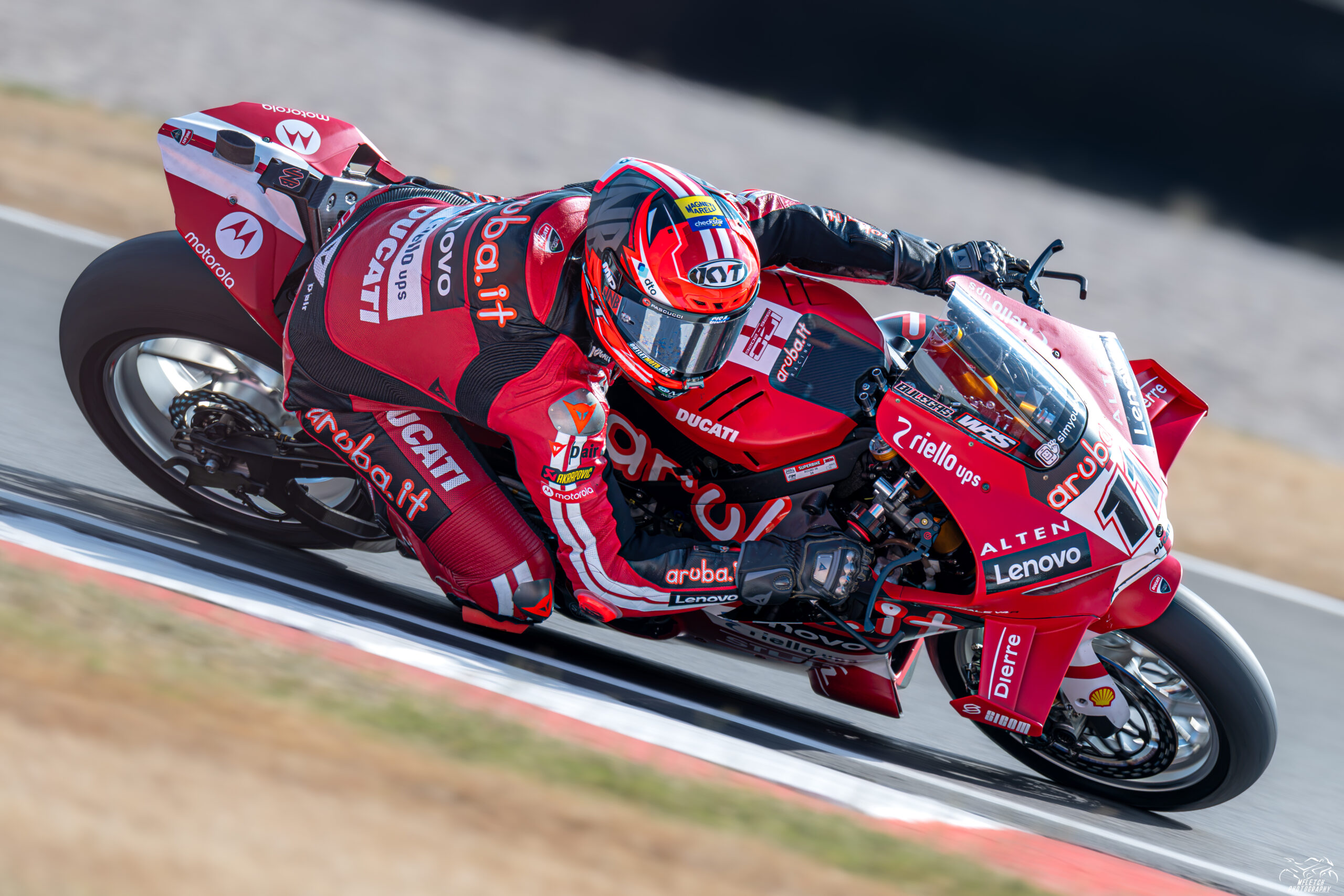
Márquez’s career has included rapid success, years of dominance with Honda, fierce rivalries, serious injuries, and a difficult journey back toward the front of the MotoGP grid.
Along the way, his aggressive riding style has influenced how modern riders approach braking, corner entry, and the physical limits of prototype motorcycles.
Understanding Márquez means examining both his competitive instincts and the technical decisions that made him one of the most distinctive riders in Grand Prix racing.
Early Life: A Racing Talent From Cervera
Marc Márquez Alentà was born on February 17, 1993, in Cervera, Spain.
He developed an interest in motorcycles at a young age and began competing in junior racing categories.
His early development took place within Spain’s competitive motorcycle racing environment, which has produced numerous successful Grand Prix riders.
Even as a young competitor, Márquez demonstrated an unusual combination of confidence, determination, and technical sensitivity.
He was willing to push his motorcycle close to its limits, sometimes accepting risks that other riders preferred to avoid.
That approach helped him develop speed, although it also contributed to crashes during his early career.
The challenge was learning how to combine aggression with the consistency required to win championships.
Entering Grand Prix Racing in the 125cc Class
Márquez made his World Championship debut in the 125cc category in 2008.
He was only 15 years old and competing against riders with considerably more experience.
His first seasons were an opportunity to understand international competition, different circuits, and the demands of racing across a full championship calendar.
By 2010, Márquez had developed into one of the strongest competitors in the category.
Riding a Derbi, he won ten races and secured the 125cc World Championship.
The title demonstrated that his raw speed had matured into championship-winning performance.
His ability to recover from setbacks and remain competitive under pressure became an important part of his identity.
Moto2: Learning to Control a More Powerful Motorcycle
In 2011, Márquez moved into Moto2.
The category presented a significant technical challenge.
The motorcycles were heavier and more powerful than the 125cc machines he had previously raced.
Riders needed greater control under braking and a more precise understanding of tire behavior.
Márquez adapted quickly.
He challenged Stefan Bradl for the championship but suffered vision problems following a crash late in the season.
The injury prevented him from completing his title challenge, and he finished second overall.
In 2012, Márquez returned with a clear objective.
He won the Moto2 World Championship, establishing himself as one of the most promising young riders in motorcycle racing.
His performances attracted attention from MotoGP teams, and Honda selected him for its factory premier-class program.
2013: A Rookie Becomes MotoGP World Champion
Márquez entered MotoGP in 2013 with the Repsol Honda Team.
He partnered Dani Pedrosa, an experienced rider who had already established himself among the championship’s strongest competitors.
Expectations were high, but few could have predicted the scale of Márquez’s immediate success.
He won his second MotoGP race at the Circuit of the Americas, becoming the youngest premier-class Grand Prix winner at the time.
Throughout the season, Márquez challenged established stars including Jorge Lorenzo, Valentino Rossi, and Pedrosa.
His aggressive riding and ability to adapt quickly made him a regular contender.
At the final round in Valencia, Márquez secured the 2013 MotoGP World Championship.
At 20 years old, he became the youngest premier-class world champion in history.
The achievement announced the arrival of a rider who would reshape the championship’s competitive landscape.
2014: A Season of Extraordinary Dominance
If 2013 introduced Márquez as a championship-winning talent, 2014 established him as a dominant force.
He won the first ten races of the season, an extraordinary sequence in modern MotoGP.
His combination of speed, confidence, and control made him exceptionally difficult to defeat.
Márquez finished the season with 13 Grand Prix victories and successfully defended his world title.
The results reflected more than raw aggression.
He had developed a strong understanding of how to manage races, exploit the Honda’s strengths, and respond to changing conditions.
However, the risks associated with his riding style remained visible.
He frequently explored the limits of grip during practice sessions and sometimes crashed while searching for additional performance.
For Márquez, understanding where the limit existed was an essential part of finding speed.
What Makes Marc Márquez’s Riding Style Different?
Márquez’s riding style is one of the most recognizable in MotoGP.
Although many modern riders use aggressive body positioning and extreme lean angles, Márquez developed a particularly distinctive approach to corner entry and front-tire control.
His technique combines physical commitment, rapid reactions, and a willingness to operate close to the point where the motorcycle loses grip.
1. Extreme Lean Angles
Márquez became famous for leaning his motorcycle to extraordinary angles during cornering.
His body position allows him to move his center of mass toward the inside of a corner while managing the motorcycle’s balance.
He frequently uses his knee and elbow sliders as contact points with the track surface.
However, touching the ground with an elbow does not automatically mean a rider is faster.
Effective cornering still depends on tire grip, entry speed, trajectory, and acceleration on exit.
Márquez’s achievement lies in combining aggressive positioning with the ability to maintain control.
2. Exceptional Front-Tire Confidence
One of Márquez’s greatest strengths has been his ability to feel and manage the front tire.
During braking and corner entry, the front tire carries a significant portion of the motorcycle’s load.
If the available grip is exceeded, the front can begin to slide.
For most riders, a sudden front-end slide creates a high probability of crashing.
Márquez has repeatedly demonstrated an ability to react to these moments before the motorcycle falls completely.
His reactions involve subtle adjustments to steering input, body position, and the forces acting through the motorcycle.
These techniques require extraordinary timing and cannot guarantee that every slide will be saved.
3. The Famous Elbow Saves
Márquez’s ability to recover from near-crashes became one of his defining characteristics.
Some of his most memorable saves occurred when the front tire lost grip while the motorcycle was heavily leaned over.
By using his body position and elbow contact, he occasionally managed to support the motorcycle long enough for the tires to regain traction.
These moments became popular highlights because they appeared to defy normal expectations of motorcycle physics.
In reality, they were the result of extremely rapid reactions, precise body control, and a narrow opportunity to recover grip.
They also demonstrated how close Márquez was willing to operate to the motorcycle’s physical limits.
4. Aggressive Braking and Corner Entry
Márquez frequently gains time through aggressive braking.
He is comfortable applying substantial braking force while preparing the motorcycle to turn.
This allows him to challenge rivals during corner entry, particularly when overtaking opportunities are limited.
However, late braking involves compromises.
Entering a corner too aggressively can reduce exit speed or force a rider away from the ideal racing line.
Márquez’s effectiveness comes from understanding when an aggressive entry is worthwhile and when a smoother approach is more productive.
5. Willingness to Take Risks
Perhaps the most recognizable aspect of Márquez’s style is his willingness to accept risk.
He often searches for the absolute limit during practice sessions rather than remaining comfortably within it.
This approach can reveal valuable information about tire grip and motorcycle behavior.
But it can also result in crashes and injuries.
His career demonstrates both the competitive benefits and the potential consequences of such an aggressive philosophy.
The Honda RC213V and Márquez’s Championship Success
Much of Márquez’s early MotoGP success came with Honda’s RC213V.
The motorcycle’s characteristics evolved over time, but Márquez frequently demonstrated an ability to exploit its strengths even when other Honda riders struggled.
His confidence under braking and willingness to manage front-end movement helped him extract competitive lap times.
However, the relationship between rider and motorcycle became increasingly complicated as Honda’s competitive position changed.
A machine that suited Márquez’s instincts could still be difficult for other riders to manage.
That raised important questions about development direction and whether the motorcycle was becoming too dependent on one rider’s exceptional abilities.
The Rivalry With Valentino Rossi
Márquez’s rivalry with Valentino Rossi became one of the most widely discussed stories in modern MotoGP.
When Márquez entered the premier class, Rossi was already an established legend.
Their relationship initially included mutual respect and admiration.
However, competition gradually increased tensions.
Several close encounters contributed to disagreements, culminating in the controversial 2015 Malaysian Grand Prix.
The incident generated intense debate among riders, teams, officials, and supporters.
Different interpretations of the events remain part of the rivalry’s history.
Beyond the controversy, their competition represented a generational transition.
Rossi had helped define an earlier period of MotoGP, while Márquez represented a younger generation prepared to challenge established champions.
Winning Championships Through Different Challenges
After his early titles, Márquez continued to develop his championship record.
He won additional MotoGP world championships in 2016, 2017, 2018, and 2019.
Each season presented different challenges.
Some required managing fierce competition from Ducati riders, while others demanded adapting to changes in Honda’s motorcycle performance.
His 2019 campaign was particularly impressive.
Márquez finished first or second in 18 of the season’s 19 races, recording 12 victories and accumulating 420 championship points.
The consistency demonstrated that he had developed beyond the image of a rider who relied exclusively on aggression.
He could manage a championship with remarkable precision while still producing exceptional speed.
The 2020 Injury That Changed His Career
The 2020 Spanish Grand Prix at Jerez became a turning point.
During the race, Márquez crashed heavily and fractured his right humerus.
The injury required surgery and began a prolonged recovery period.
Complications followed, including additional operations and an extended absence from competition.
For a rider whose success depended heavily on physical confidence and precise motorcycle control, the recovery process was particularly challenging.
Márquez also experienced further difficulties related to diplopia, or double vision, following subsequent incidents.
His absence changed the competitive landscape of MotoGP.
It also raised questions about whether he could return to the level that had made him a dominant champion.
The Difficult Road Back to Winning
Márquez returned to MotoGP competition in 2021.
Although he was no longer consistently dominant, he demonstrated that his competitive instincts remained intact.
He won the German Grand Prix at Sachsenring, a circuit where he had previously enjoyed extraordinary success.
He also secured victories at the Americas Grand Prix and Emilia-Romagna Grand Prix that season.
These results were important milestones, but his recovery was not straightforward.
Physical limitations, additional medical treatment, and Honda’s declining competitiveness continued to complicate his return.
By 2023, Márquez faced a difficult situation.
He remained capable of producing exceptional individual performances, but regular victories were increasingly difficult to achieve with Honda.
The relationship that had produced six MotoGP world championships was approaching its end.
Leaving Honda: One of MotoGP’s Biggest Career Decisions
At the end of 2023, Márquez left Honda.
The decision was significant because he had spent his entire premier-class career with the manufacturer.
Honda had supported his rise from rookie champion to one of MotoGP’s most successful riders.
However, the competitive situation had changed.
Márquez wanted an opportunity to race on machinery capable of challenging near the front more consistently.
He joined Gresini Racing for the 2024 season, riding a Ducati Desmosedici.
The move involved leaving a factory-team environment for an independent squad.
It was a calculated decision aimed at rebuilding his competitive prospects.
2024: Rediscovering His Speed With Gresini Ducati
The 2024 season gave Márquez an opportunity to adapt to a different motorcycle philosophy.
Ducati’s Desmosedici offered characteristics that differed from the Honda machines he had ridden for more than a decade.
He needed to adjust his braking technique, cornering approach, and acceleration management.
As the season progressed, his confidence improved.
Márquez returned to winning at the Aragon Grand Prix, ending a long period without a Grand Prix victory.
He also won at Misano and Phillip Island.
His performances demonstrated that he remained capable of competing at the highest level.
More importantly, they showed that his riding style could evolve to suit a different manufacturer.
Joining the Factory Ducati Team
Márquez joined the Ducati Lenovo Team for the 2025 MotoGP season.
The move placed him alongside Francesco Bagnaia, a two-time MotoGP world champion.
It created one of the most closely watched rider partnerships in the championship.
Both riders possessed exceptional talent, but their techniques and racing instincts differed.
Bagnaia was known for precise braking and smooth cornering, while Márquez had built his reputation on aggressive corner entry and an ability to manage unpredictable motorcycle movement.
For Ducati, the pairing offered valuable feedback from two highly accomplished competitors.
For Márquez, it represented an opportunity to continue rebuilding his career at the front of MotoGP.
How Márquez’s Riding Style Has Evolved
The Márquez who entered MotoGP in 2013 is not identical to the rider who returned from serious injuries and moved to Ducati.
Experience and physical challenges have influenced his approach.
His early career was defined by an extraordinary willingness to push the motorcycle’s front tire beyond conventional limits.
Over time, he developed a greater understanding of championship management and the importance of consistency.
His transition to Ducati also required technical adaptation.
Different motorcycles reward different approaches to braking, turning, and acceleration.
A rider cannot simply reproduce every movement from one machine and expect identical results on another.
Márquez’s ability to adjust while retaining his competitive instincts is an important part of his later career.
Marc Márquez vs Other MotoGP Champions
Comparing Márquez with other champions reveals how different riding styles can produce success.
Marc Márquez vs Valentino Rossi
Rossi was celebrated for his racecraft, tactical awareness, and ability to manage battles over an entire Grand Prix.
Márquez became particularly associated with aggressive braking, extreme front-end confidence, and rapid reactions.
Both riders demonstrated adaptability and exceptional competitive determination.
Marc Márquez vs Jorge Lorenzo
Lorenzo was known for smooth cornering, precise racing lines, and maintaining consistent lap times.
Márquez frequently relied on a more aggressive approach to corner entry and motorcycle movement.
The contrast illustrated two different ways of extracting performance from MotoGP machinery.
Marc Márquez vs Francesco Bagnaia
Bagnaia’s riding style emphasizes braking precision, stability, and efficient corner exits.
Márquez has historically been more comfortable allowing the motorcycle to move aggressively under braking and during corner entry.
However, both riders adapt their techniques according to tire behavior, motorcycle characteristics, and race conditions.
Marc Márquez’s World Championship Record
| Year | Category | Achievement |
|---|---|---|
| 2010 | 125cc | World Champion |
| 2012 | Moto2 | World Champion |
| 2013 | MotoGP | World Champion |
| 2014 | MotoGP | World Champion |
| 2016 | MotoGP | World Champion |
| 2017 | MotoGP | World Champion |
| 2018 | MotoGP | World Champion |
| 2019 | MotoGP | World Champion |
| 2025 | MotoGP | World Champion |
These nine world championships reflect success across multiple generations of motorcycles and different stages of Márquez’s career.
Why Marc Márquez Matters to Modern MotoGP
Márquez’s influence extends beyond championship statistics.
He helped redefine expectations of what a rider could achieve when a motorcycle began losing front-end grip.
His spectacular saves attracted attention from casual viewers while also raising technical questions about body positioning, tire behavior, and rider reaction time.
His success encouraged discussion about the relationship between aggressive riding and motorcycle development.
His injuries demonstrated the physical risks associated with competing near the limit.
And his move from Honda to Ducati illustrated how even an established champion may need to change teams and adapt his technique to remain competitive.
These experiences make his career particularly valuable for understanding the demands of modern MotoGP.
Frequently Asked Questions About Marc Márquez
How many world championships has Marc Márquez won?
Marc Márquez has won nine Grand Prix world championships, including seven in MotoGP, one in Moto2, and one in 125cc, through the 2025 season.
What makes Marc Márquez’s riding style unique?
His riding style is characterized by aggressive braking, extreme lean angles, exceptional front-tire confidence, and an unusual ability to recover from near-crashes.
When did Marc Márquez first win the MotoGP championship?
Márquez won his first MotoGP World Championship in 2013 during his rookie season with Repsol Honda.
Why did Marc Márquez leave Honda?
He left Honda after the 2023 season to pursue a more competitive opportunity with Ducati machinery at Gresini Racing.
What happened to Marc Márquez in 2020?
He suffered a serious right-arm injury during the Spanish Grand Prix at Jerez, beginning a lengthy period of surgery and recovery.
Which teams has Marc Márquez raced for in MotoGP?
His premier-class teams have included Repsol Honda, Gresini Racing Ducati, and the factory Ducati Lenovo Team.
Why is Marc Márquez famous for saving crashes?
He has demonstrated exceptional reactions and body control during front-tire slides, sometimes recovering grip before the motorcycle falls completely.
Conclusion: A Champion Defined by Speed, Risk, and Adaptation
Marc Márquez’s career is a reminder that greatness in MotoGP requires more than natural talent.
His rapid rise through 125cc and Moto2 established him as an exceptional prospect.
His early MotoGP championships demonstrated an extraordinary ability to compete against established champions.
His dominance with Honda revealed how effectively he could exploit a motorcycle’s strengths.
But his career also exposed the consequences of operating so close to the limit.
Serious injuries interrupted his success and forced him to reconsider how he approached competition.
His subsequent move to Ducati demonstrated resilience and a willingness to adapt.
What makes Márquez particularly fascinating is that his career contains both extremes: spectacular achievements and difficult setbacks.
He has been a dominant champion, an injured rider fighting to return, and a competitor willing to rebuild his career on unfamiliar machinery.
For MotoGP fans, his legacy is not defined by one spectacular save or a single championship.
It is the combination of speed, technical sensitivity, determination, and adaptation that has made Marc Márquez one of the most influential riders of his generation.
Leave a Reply