How MotoGP Engines Work: Understanding Prototype Motorcycle Technology
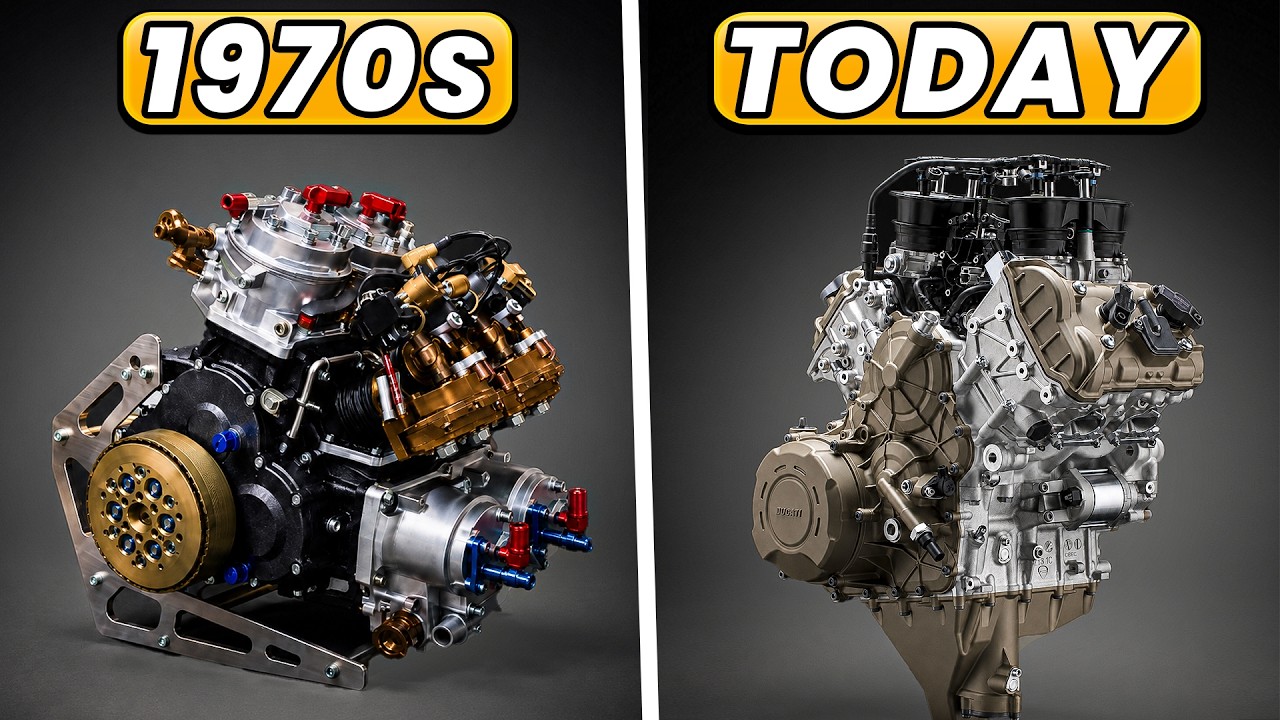
MotoGP engines are compact, extremely powerful, and engineered to operate under conditions that would place enormous stress on a conventional road motorcycle. They must deliver strong acceleration while remaining light enough to support rapid changes of direction.
But producing horsepower is only one part of the challenge.
Engineers must also control heat, vibration, fuel consumption, traction, and the way power reaches the rear wheel. A motorcycle with impressive peak power can still struggle if its engine characteristics make it difficult for the rider to accelerate out of corners.
That is why modern MotoGP technology involves far more than simply building the most powerful engine possible.
Understanding how MotoGP engines work reveals the relationship between mechanical engineering, electronic control systems, and the physical demands of racing on two wheels.
What Makes a MotoGP Engine Different?
MotoGP is the premier class of motorcycle Grand Prix racing. Unlike production-based championships, its motorcycles are purpose-built racing prototypes.
This distinction is fundamental.
A production motorcycle must satisfy requirements involving road use, manufacturing costs, emissions, noise, durability, and everyday practicality.
A MotoGP prototype is developed primarily to compete within a specific technical rulebook.
Manufacturers can design specialized engine components, transmissions, electronics, and chassis systems that would be impractical or prohibitively expensive for ordinary road motorcycles.
The result is a machine designed around lap time rather than everyday convenience.
Even so, MotoGP engines still operate according to the basic principles of internal combustion.
They draw air into cylinders, mix it with fuel, compress the mixture, ignite it, and convert the resulting pressure into mechanical movement.
The difference lies in how efficiently and aggressively these processes are optimized for racing.
How a MotoGP Four-Stroke Engine Produces Power
Modern MotoGP engines use the four-stroke internal combustion cycle.
The process takes place inside cylinders containing pistons connected to a crankshaft.
Each complete cycle involves four stages.
1. Intake Stroke
During the intake stroke, the piston moves downward while the intake valves open.
Air enters the cylinder through the intake system, with fuel delivered through electronically controlled injection.
The engine’s ability to fill the cylinder effectively has a major influence on how much power it can produce.
Engineers optimize intake geometry, valve timing, and airflow to support performance across the required engine-speed range.
2. Compression Stroke
The piston moves upward, compressing the air-fuel mixture inside the combustion chamber.
Compression increases the mixture’s pressure and temperature before ignition.
High-performance racing engines use carefully engineered combustion chambers and compression characteristics to extract energy efficiently.
However, excessive pressure or temperature can increase the risk of abnormal combustion.
Engineers must therefore balance power output with fuel properties, cooling, and reliability.
3. Power Stroke
Near the end of compression, the spark plug ignites the mixture.
Combustion generates high-pressure gases that push the piston downward.
The connecting rod transfers this force to the crankshaft, converting the piston’s movement into rotational motion.
This is the stage that produces useful mechanical work.
In a four-cylinder engine, the cylinders operate at different points in their cycles, allowing the engine to produce a continuing sequence of power pulses.
4. Exhaust Stroke
After combustion, the exhaust valves open and the piston moves upward to expel the spent gases.
The gases leave through the exhaust system.
Exhaust design influences how efficiently gases leave the cylinders and how the engine performs at different speeds.
Once the exhaust stroke is complete, the cycle begins again.
At racing engine speeds, these processes occur thousands of times every minute across the engine’s cylinders.
Why MotoGP Engines Use Four Cylinders
Under the current 1,000 cc technical formula, MotoGP engines are limited to four cylinders.
Using multiple relatively small cylinders allows engineers to design an engine capable of operating at high rotational speeds.
Smaller pistons can help manage the mechanical demands associated with rapid reciprocating movement, although their design still requires careful control of weight, friction, and strength.
Four-cylinder engines also offer flexibility in crankshaft configuration and firing order.
These characteristics affect not only peak power but also how the engine delivers torque to the rear wheel.
In MotoGP, the timing and character of power delivery can influence traction, tire behavior, and rider confidence.
The goal is not simply to maximize combustion events.
It is to produce useful power in a way that the motorcycle and rider can exploit.
V4 vs. Inline-Four: Two Important MotoGP Engine Layouts
Two major four-cylinder configurations have played important roles in modern MotoGP: the V4 and the inline-four.
Both can produce exceptional performance, but their physical layouts create different engineering opportunities and compromises.
V4 Engines
A V4 engine places four cylinders in two banks arranged at an angle to one another.
This layout can provide a relatively compact engine length, giving engineers flexibility when positioning the power unit within the chassis.
Engine placement affects wheelbase, swingarm length, weight distribution, and the motorcycle’s overall handling characteristics.
Manufacturers such as Ducati, Honda, Aprilia, and KTM have used V4 configurations in MotoGP.
However, the V4 label does not describe one identical engine design.
Different manufacturers use their own cylinder-bank angles, crankshaft arrangements, intake systems, and internal components.
Those decisions influence performance and packaging.
Inline-Four Engines
An inline-four engine arranges all four cylinders in a single row.
Yamaha and Suzuki became particularly associated with this layout during the modern four-stroke era.
Inline-four engines can offer useful design characteristics, but their greater transverse packaging width can create different challenges for aerodynamics and chassis layout.
The relationship between engine configuration and handling is complicated.
It would be inaccurate to claim that every inline-four motorcycle corners better or that every V4 motorcycle accelerates faster.
Actual performance depends on the complete machine, including the engine’s internal design, chassis geometry, electronics, aerodynamics, and tires.
As MotoGP technology has evolved, manufacturers have repeatedly reconsidered the compromises associated with different engine layouts.
Why MotoGP Engines Rev So High
Engine speed is measured in revolutions per minute, commonly abbreviated as RPM.
A higher engine speed allows a four-stroke engine to complete more combustion cycles per second.
When combined with sufficient torque, this can produce substantial power.
The relationship between power, torque, and rotational speed is fundamental:
Power = Torque × Angular Velocity
In practical terms, an engine can produce more power by increasing torque, rotational speed, or both.
MotoGP engineers use lightweight internal components, sophisticated valve systems, specialized materials, and carefully designed lubrication systems to support high engine speeds.
However, higher RPM also increases mechanical stress.
Pistons accelerate and decelerate rapidly, connecting rods experience significant forces, and valve systems must operate accurately at extraordinary speeds.
Increasing RPM indefinitely is not possible.
The challenge is to find an operating range that produces competitive power without compromising reliability or violating technical regulations.
Pneumatic Valves: Controlling the Engine at High RPM
One of the major challenges in a high-revving four-stroke engine is controlling the intake and exhaust valves.
Traditional motorcycle engines commonly use metal springs to close their valves.
At very high engine speeds, conventional springs can encounter difficulties maintaining precise valve movement.
Problems such as valve float may occur when the valve does not follow the intended camshaft profile accurately.
Some MotoGP manufacturers address this challenge through pneumatic valve return systems.
These systems use pressurized gas to provide the force required to close the valves.
The arrangement can support accurate valve control at high rotational speeds.
However, pneumatic systems introduce their own complexity, including pressure management and specialized engineering requirements.
They are valuable because the engine can operate under demanding conditions where conventional valve springs may become a limiting factor.
Ducati’s Desmodromic Valve Technology
Ducati is particularly associated with desmodromic valve actuation.
In a conventional valve train, the camshaft opens a valve and a spring closes it.
A desmodromic system uses mechanical mechanisms to control both the opening and closing movements.
This provides positive mechanical control of the valve rather than relying on a conventional return spring.
The technology has been a defining part of Ducati’s engine philosophy for decades.
In MotoGP, Ducati’s Desmosedici engines have used desmodromic valve systems to support high-performance operation.
However, the system is not inherently superior in every engineering situation.
It involves specialized components, careful adjustment, and complex mechanical design.
Both desmodromic and pneumatic valve technologies can support extremely competitive racing engines.
The most effective solution depends on how it integrates with the complete engine architecture.
How Much Horsepower Does a MotoGP Engine Produce?
MotoGP manufacturers do not routinely publish complete, independently verified engine performance curves.
As a result, exact horsepower figures should be treated carefully.
Modern 1,000 cc MotoGP prototypes are commonly estimated to produce more than 250 horsepower, with some public estimates approaching or exceeding 300 horsepower.
However, these figures are not standardized official measurements for every manufacturer.
Actual output can vary according to engine design, operating conditions, and the measurement method used.
What matters most is the combination of power and motorcycle mass.
MotoGP machines are extremely light compared with most road-going motorcycles.
This produces an exceptional power-to-weight ratio and enables extraordinary acceleration.
Yet usable performance depends on much more than engine output.
When accelerating, the motorcycle must maintain sufficient rear-tire grip while controlling wheelies and preserving stability.
An engine that delivers power too aggressively may make the motorcycle harder to ride quickly.
For this reason, manufacturers focus heavily on torque delivery and electronic control.
How MotoGP Engines Transfer Power to the Rear Wheel
Combustion produces rotational force at the crankshaft, but that power must pass through several components before reaching the rear tire.
The drivetrain includes the primary drive, clutch, gearbox, and final-drive system.
Each component has an important role.
Primary Drive
The primary drive transfers rotational power from the crankshaft toward the clutch and transmission.
Its gearing influences the relationship between engine speed and the rotation of the transmission input.
Clutch
The clutch allows the connection between the engine and gearbox to be controlled.
It is especially important during race starts.
Once the motorcycle is moving, riders can use specialized shifting systems that reduce the need for conventional clutch operation during gear changes.
Gearbox
The gearbox provides different gear ratios to match engine performance with the motorcycle’s speed.
Lower gears multiply torque more strongly, helping acceleration.
Higher gears allow the motorcycle to reach greater speeds without exceeding its intended engine-speed range.
Final Drive
Most MotoGP motorcycles use a chain-driven final-drive system.
Power passes from the gearbox output to the rear wheel through sprockets and a chain.
Teams can adjust final-drive ratios to suit circuit characteristics within the permitted technical framework.
Seamless Gearboxes: Why MotoGP Shifts Are So Fast
Modern MotoGP motorcycles use highly specialized racing transmissions.
One important development is the seamless gearbox.
Traditional gear changes involve a brief interruption or transition in the delivery of power.
A seamless transmission is designed to minimize the interruption of drive during shifts.
This can improve acceleration and help maintain motorcycle stability.
On a racing motorcycle, stability during gear changes is especially important.
A sudden interruption or restoration of torque can influence rear-tire grip and chassis movement.
Reducing those disturbances can help the rider maintain a more consistent line through a corner or during acceleration.
The detailed internal mechanisms used by manufacturers are highly specialized and may be protected by proprietary engineering knowledge.
However, the general objective is clear: change gear quickly while maintaining smooth and effective power delivery.
Why Engine Braking Is Important in MotoGP
Engine braking occurs when the engine contributes resistance as the motorcycle slows down.
When a rider closes the throttle and downshifts, the engine can generate braking torque through the drivetrain.
This effect influences how the motorcycle behaves when entering a corner.
Too much engine braking may destabilize the rear wheel or increase the risk of sliding.
Too little may reduce the rider’s preferred level of deceleration and corner-entry control.
MotoGP motorcycles use sophisticated electronic strategies to manage engine braking.
These systems can influence throttle behavior and the way the engine responds during deceleration.
Riders and engineers adjust the settings according to circuit conditions and riding preferences.
Effective engine-braking management can improve consistency, tire behavior, and confidence under heavy braking.
MotoGP Electronics: Managing Power and Traction
Modern MotoGP engines operate as part of a sophisticated electronic control system.
The motorcycle uses sensors to monitor important parameters such as engine speed, throttle position, wheel speeds, and other operating conditions.
Control software processes this information to manage engine behavior.
The championship uses standardized electronic hardware and software frameworks, limiting the extent to which manufacturers can create completely independent control systems.
However, teams still work extensively on calibration, settings, and the integration of electronics with their motorcycles.
Traction Control
Traction control helps manage excessive rear-wheel slip during acceleration.
When the rear tire begins spinning faster than intended, the system can adjust engine torque delivery.
This helps the rider accelerate while maintaining control.
However, traction control cannot create grip that the tire does not possess.
The rider must still manage throttle application and motorcycle position.
Anti-Wheelie Control
Powerful motorcycles can lift their front wheels during acceleration.
Although a small amount of front-wheel lift may occur naturally, excessive wheelies can reduce acceleration efficiency and control.
Anti-wheelie strategies manage engine output to help limit unwanted front-wheel lift.
Throttle Mapping
Electronic throttle control allows engineers to define how engine torque responds to rider input.
Different maps can provide different throttle characteristics.
A smoother response may help in low-grip conditions, while another setting may prioritize stronger acceleration.
These adjustments allow riders to adapt the motorcycle to changing track conditions.
Why MotoGP Engines Need Advanced Cooling Systems
High-performance combustion engines generate substantial heat.
Only part of the fuel’s chemical energy becomes useful mechanical work.
A significant amount is released as heat through the exhaust, cooling system, and engine components.
MotoGP motorcycles use specialized radiators, coolant circuits, oil systems, and airflow management to control temperatures.
Cooling is essential because excessive temperatures can reduce performance and damage components.
However, larger cooling openings can increase aerodynamic drag.
Engineers must therefore balance thermal management against aerodynamic efficiency.
This becomes especially challenging at circuits with high ambient temperatures or when a rider spends extended periods following another motorcycle.
The airflow reaching the cooling system can change depending on speed and the position of nearby competitors.
How Aerodynamics Influence MotoGP Engine Performance
Aerodynamics and engine performance are closely connected.
As motorcycles became more powerful, controlling wheelies and maintaining stability during acceleration became increasingly important.
Manufacturers introduced aerodynamic devices to help manage these challenges.
Winglets and other permitted aerodynamic surfaces can generate downforce.
That additional force can help keep the front wheel closer to the ground during acceleration.
However, aerodynamic downforce often comes with additional drag.
More drag increases the power required to achieve a given speed.
Engineers must therefore balance acceleration stability, cornering behavior, and straight-line efficiency.
The best aerodynamic configuration is not necessarily the one that generates the most downforce.
It is the configuration that allows the motorcycle to achieve the fastest overall lap time.
MotoGP Engines vs. Road Motorcycle Engines
Although MotoGP technology shares fundamental principles with road-going sportbikes, the engineering priorities differ considerably.
| Feature | MotoGP Prototype | Production Sportbike |
|---|---|---|
| Primary Purpose | Maximum racing performance | Road use and high-performance riding |
| Engine Development | Purpose-built prototype engineering | Production-oriented engineering |
| Valve Systems | Specialized high-RPM systems | Typically conventional mechanical valve trains |
| Transmission | Specialized seamless racing gearbox | Conventional production gearbox, often with quickshifter |
| Electronics | Racing-specific control strategies | Road-oriented safety and performance systems |
| Durability Requirements | Designed for regulated racing use | Designed for extended ownership and maintenance intervals |
| Manufacturing Cost | Extremely high | Constrained by production economics |
These differences explain why MotoGP prototypes cannot be understood simply as modified road motorcycles.
They are purpose-built systems created around the technical demands of racing.
Why Engine Character Matters More Than Peak Horsepower
Peak horsepower is an important measure of engine capability, but it does not describe the complete riding experience.
A motorcycle must accelerate while leaning through corners, managing limited tire grip, and maintaining stability.
Engine torque delivery influences how easily the rider can control these conditions.
A sudden increase in torque may cause excessive wheelspin or disturb the motorcycle’s balance.
A more progressive delivery can allow the rider to accelerate earlier and more confidently.
Crankshaft design and firing order can also influence the character of the engine.
Manufacturers investigate different arrangements to optimize vibration, traction behavior, and mechanical performance.
However, no single firing order guarantees superior traction.
The result depends on the interaction between the engine, electronics, chassis, tires, and rider.
This is why two motorcycles with similar peak power can produce different lap times.
The Importance of Engine Reliability in MotoGP
MotoGP engines operate under extreme mechanical and thermal conditions.
Despite this, manufacturers cannot simply replace engines without regard to championship regulations.
Engine allocations and development restrictions can limit how teams use and modify their power units during a season.
The precise rules depend on the championship’s current concession system and technical framework.
Manufacturers must therefore balance performance against durability.
An engine that produces exceptional power but fails frequently may damage a rider’s championship prospects.
Reliability depends on materials, lubrication, cooling, manufacturing precision, and careful control of mechanical stress.
Engineers also analyze operating data to identify potential problems before they cause failures.
Successful engine design is therefore not only about achieving maximum output.
It is about delivering competitive performance consistently over the required racing distance.
What Changes with MotoGP’s 850cc Engines in 2027?
MotoGP is preparing for another major technical transition in 2027.
The new regulations reduce the maximum engine capacity from 1,000 cc to 850 cc.
The change is intended to influence performance, safety, and the future direction of motorcycle prototype development.
The maximum cylinder bore is also being reduced, affecting the dimensions and potential operating characteristics of the engines.
Manufacturers must reconsider combustion chamber design, piston dimensions, crankshaft characteristics, and overall engine packaging.
Reducing displacement does not necessarily reduce performance in a simple, directly proportional way.
Engineers can change combustion efficiency, rotational speed, and other characteristics to recover performance within the permitted rules.
However, the smaller displacement creates a different set of design constraints.
Other Important 2027 Changes
The 2027 framework also includes changes beyond engine capacity.
- A transition to 850 cc engines.
- Reduced maximum cylinder bore.
- Restrictions intended to reduce aerodynamic complexity.
- A ban on ride-height and holeshot devices.
- Greater use of sustainable fuel under the new fuel requirements.
- Changes intended to support safety and closer competition.
These changes may affect how motorcycles accelerate, brake, and change direction.
They could also alter the balance between manufacturers with different engineering approaches.
However, the competitive consequences cannot be determined solely from the regulations.
The real impact will depend on how successfully manufacturers develop their new motorcycles.
Why MotoGP Engine Technology Matters Beyond Racing
MotoGP serves as a highly demanding environment for motorcycle engineering.
Manufacturers investigate combustion efficiency, friction reduction, electronic control, materials, and mechanical durability under extreme conditions.
Some lessons can influence future production motorcycles, although prototype technology does not always transfer directly to road use.
For example, specialized racing components may be too expensive or require too much maintenance for everyday motorcycles.
Other developments, such as improvements in electronic control strategies or manufacturing processes, may offer broader applications.
The value of MotoGP technology therefore lies partly in the knowledge gained through development.
Racing provides a setting where engineers can test ideas against demanding performance targets and direct competition.
Frequently Asked Questions About MotoGP Engines
What engine does a MotoGP motorcycle use?
Under the current 1,000 cc regulations, MotoGP motorcycles use prototype four-stroke engines with a maximum of four cylinders.
Are MotoGP engines V4 or inline-four?
Both configurations have been used in modern MotoGP. Manufacturers select their engine layout according to their engineering philosophy and motorcycle design.
How much horsepower does a MotoGP bike have?
Modern 1,000 cc MotoGP prototypes are commonly estimated to produce more than 250 horsepower, although exact manufacturer figures are not consistently published or independently verified.
Why do MotoGP engines rev so high?
High rotational speeds allow the engine to complete more combustion cycles per second, supporting high power output when combined with sufficient torque.
What are pneumatic valves in MotoGP?
Pneumatic valve systems use pressurized gas to help close engine valves accurately at high rotational speeds.
What is Ducati’s desmodromic engine technology?
Desmodromic valve actuation mechanically controls both the opening and closing movements of engine valves.
Do MotoGP motorcycles use automatic transmissions?
No. MotoGP motorcycles use specialized racing transmissions, including seamless gearboxes, but riders still select gears.
What is a seamless gearbox?
A seamless gearbox is designed to minimize interruptions in drive during gear changes, improving acceleration and motorcycle stability.
Do MotoGP bikes have traction control?
Yes. MotoGP motorcycles use electronic traction-control strategies to help manage rear-wheel slip during acceleration.
Why is engine braking important in MotoGP?
Engine braking affects deceleration and rear-wheel behavior when entering corners, making it an important part of motorcycle setup.
Are MotoGP motorcycles faster than road bikes?
MotoGP prototypes are designed for exceptional circuit performance, with specialized engines, chassis, electronics, and tires that provide major advantages over typical road motorcycles.
Are MotoGP engines changing in 2027?
Yes. The 2027 regulations reduce the maximum engine displacement from 1,000 cc to 850 cc and introduce other significant technical changes.
Conclusion: MotoGP Engines Are About More Than Raw Power
MotoGP engines represent some of the most advanced examples of motorcycle internal combustion engineering.
They combine high-performance four-stroke technology with specialized valve systems, lightweight internal components, sophisticated electronics, and advanced racing transmissions.
However, the most powerful engine is not automatically the most competitive.
Riders must be able to control the available torque while managing tire grip, wheelies, braking stability, and corner-exit acceleration.
Engineers must also consider cooling, reliability, chassis packaging, and aerodynamic performance.
The result is a motorcycle designed as a complete racing system rather than a collection of independently optimized components.
As MotoGP approaches the transition to 850 cc engines in 2027, manufacturers face another opportunity to reconsider how prototype motorcycles should deliver performance.
Understanding MotoGP engines means understanding the relationship between power, control, and precision. The greatest engineering achievement is not simply producing extraordinary horsepower, but making that power usable on a racing circuit.
Leave a Reply