Michael Jordan: The Legacy That Changed Basketball Forever
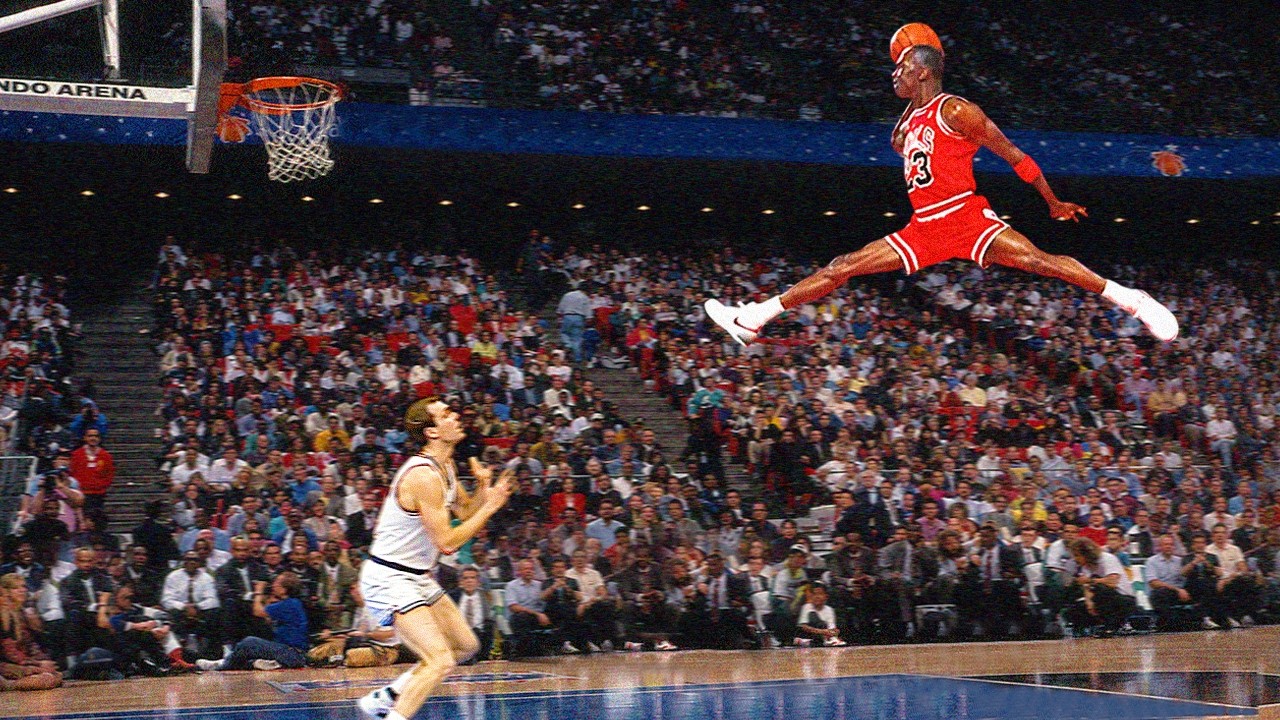
Yet Jordan’s legacy is more complicated than a collection of trophies or spectacular highlights. His career included difficult playoff defeats, intense rivalries, controversial decisions, and the challenge of maintaining success under extraordinary public attention.
Understanding Michael Jordan’s impact means looking beyond the famous moments. It means examining how he developed as a player, how the Chicago Bulls became a dynasty, and why his influence continues to shape basketball long after his retirement.
From North Carolina to the National Stage
Michael Jeffrey Jordan was born on February 17, 1963, in Brooklyn, New York, and grew up primarily in Wilmington, North Carolina.
His basketball journey was not an uninterrupted series of victories. During high school, Jordan experienced disappointment when he failed to make the varsity team as a sophomore. The story has sometimes been simplified into a complete rejection from basketball, but he continued developing through the school’s junior varsity program.
That experience became an important part of the public narrative surrounding his determination. Still, Jordan’s rise depended on much more than motivation. He developed his physical abilities, improved his fundamentals, and became an increasingly accomplished player.
He eventually joined the University of North Carolina, where he played under legendary coach Dean Smith.
The 1982 NCAA Championship
Jordan’s first major national moment came during the 1982 NCAA championship game against Georgetown.
As a freshman, he made a late jump shot that gave North Carolina the lead in a 63–62 victory.
The basket did not immediately make him a professional superstar, but it demonstrated his ability to contribute in a high-pressure situation.
During his college career, Jordan continued improving his scoring, defensive awareness, and overall understanding of the game.
In 1984, he was selected third overall in the NBA Draft by the Chicago Bulls, behind Hakeem Olajuwon and Sam Bowie.
At the time, few could have predicted how profoundly that selection would change the Bulls and the NBA.
Michael Jordan’s Arrival in the NBA
Jordan entered the NBA during a period when Magic Johnson and Larry Bird were central to the league’s growing popularity.
Basketball already had major stars and established rivalries. Jordan did not create the NBA’s international appeal by himself, but he would help expand it to another level.
During the 1984–85 season, he averaged 28.2 points per game and won the NBA Rookie of the Year award.
His athleticism immediately attracted attention.
Jordan could attack the basket with explosive speed, finish through contact, and create scoring opportunities from difficult positions.
His ability to remain airborne while adjusting his body became one of his most recognizable characteristics.
However, the young Bulls were not championship contenders.
Jordan’s individual talent was obvious, but turning that talent into sustained team success required several years of development.
Early Playoff Defeats and the Road to Greatness
One of the most important aspects of Jordan’s career is that he did not immediately dominate the postseason.
During the 1980s, the Chicago Bulls repeatedly encountered stronger and more experienced teams.
Jordan produced extraordinary individual performances, but opponents often had more balanced rosters and greater playoff experience.
The 63-Point Game Against Boston
In the 1986 NBA playoffs, Jordan scored 63 points against the Boston Celtics in a double-overtime game.
It remains the NBA record for points in a single playoff game.
The performance demonstrated Jordan’s scoring ability against an elite opponent.
Yet Chicago lost the game and was swept in the series.
That contrast revealed an important lesson: even an exceptional individual performance does not guarantee victory in a team sport.
The Detroit Pistons Rivalry
Jordan’s rivalry with the Detroit Pistons became one of the defining conflicts of his early career.
Detroit used a physical defensive approach that placed enormous pressure on him.
The Pistons eliminated Chicago from the playoffs in 1988, 1989, and 1990.
Those defeats forced the Bulls to become stronger collectively.
Jordan continued developing, while teammates such as Scottie Pippen and Horace Grant became increasingly important.
In 1991, Chicago finally defeated Detroit in the Eastern Conference Finals.
It was a turning point that opened the door to the Bulls’ first championship.
The Chicago Bulls Dynasty: Six Championships
The most celebrated period of Jordan’s career came through two separate championship three-peats.
Chicago won three consecutive titles from 1991 to 1993 and another three from 1996 to 1998.
Jordan was named NBA Finals MVP in all six championship seasons.
| Year | Finals Opponent | Series Result |
|---|---|---|
| 1991 | Los Angeles Lakers | Bulls won 4–1 |
| 1992 | Portland Trail Blazers | Bulls won 4–2 |
| 1993 | Phoenix Suns | Bulls won 4–2 |
| 1996 | Seattle SuperSonics | Bulls won 4–2 |
| 1997 | Utah Jazz | Bulls won 4–2 |
| 1998 | Utah Jazz | Bulls won 4–2 |
Why the First Three-Peat Mattered
The Bulls’ first championship in 1991 established Jordan as more than an extraordinary scorer.
He had become the central player on a championship team.
The victories in 1992 and 1993 confirmed that Chicago’s success was not accidental.
The Bulls had developed a system built around Jordan’s scoring, Pippen’s versatility, defensive intensity, and contributions from the supporting roster.
Head coach Phil Jackson and the triangle offense also played important roles in the team’s identity.
Jordan remained the leading attraction, but Chicago’s success depended on a coordinated approach.
The First Retirement and the Baseball Experiment
In October 1993, Jordan announced his retirement from basketball.
The decision followed the murder of his father, James Jordan, earlier that year, and came after an exhausting period of intense public scrutiny.
Jordan later pursued professional baseball, a sport his father had encouraged him to play.
In 1994, he played minor league baseball for the Birmingham Barons, a Chicago White Sox affiliate.
His baseball performance was modest compared with his basketball achievements.
However, the decision represented an unusual attempt by an established superstar to pursue a different professional challenge.
His absence also changed the Bulls.
Chicago remained competitive, but the team did not win another championship during his time away.
The Return: A Second Era of Dominance
In March 1995, Jordan returned to the NBA.
His comeback was announced through the now-famous words, “I’m back.”
Jordan initially wore number 45 before returning to his familiar number 23.
The Bulls were eliminated by the Orlando Magic in the 1995 playoffs.
That defeat reminded observers that even Jordan needed time to regain his full basketball rhythm.
The following season, Chicago produced one of the greatest regular-season performances in NBA history.
The Historic 1995–96 Bulls
The Bulls finished the 1995–96 regular season with a 72–10 record.
At the time, it was the best regular-season record in NBA history.
The Golden State Warriors later surpassed that mark with 73 wins in 2015–16.
Chicago’s achievement remains significant because the Bulls also won the championship that season.
Jordan captured the regular-season MVP award and Finals MVP.
The team then completed two more championship seasons in 1997 and 1998.
The second three-peat reinforced Jordan’s reputation for sustained excellence.
The Last Shot: The 1998 NBA Finals
Few moments represent Jordan’s career more clearly than the closing seconds of Game 6 of the 1998 NBA Finals.
Chicago faced the Utah Jazz and held a 3–2 series lead.
With the Bulls trailing late in the game, Jordan scored a layup, then stole the ball from Karl Malone.
On the following possession, he created space against Bryon Russell and made a jump shot that gave Chicago an 87–86 lead.
The Jazz failed to score on their final possession.
Chicago secured its sixth championship, and Jordan won his sixth Finals MVP award.
The shot became one of the defining images of his career.
It also marked the end of the Bulls’ championship dynasty.
Michael Jordan’s Playing Style: More Than Athleticism
Jordan’s early reputation was built on explosive athleticism.
His dunks, acrobatic finishes, and ability to attack defenders made him one of basketball’s most exciting players.
However, focusing only on his athletic ability overlooks how much his game evolved.
Mid-Range Scoring and Footwork
As his career progressed, Jordan developed a highly effective mid-range game.
His fadeaway jumper became especially difficult to defend.
He used footwork, balance, and body positioning to create separation from opponents.
This allowed him to remain an elite scorer even as his style became less dependent on explosive drives.
Defensive Excellence
Jordan was also an accomplished defender.
He won the NBA Defensive Player of the Year award in 1988 and earned nine selections to the NBA All-Defensive First Team.
His defensive strengths included anticipation, quick hands, lateral movement, and the ability to pressure opposing ball handlers.
That two-way impact is an important part of his legacy.
Competitive Decision-Making
Jordan’s ability to recognize defensive weaknesses became increasingly important during his championship years.
He could score through isolation, operate within the triangle offense, or create opportunities when opponents committed multiple defenders to stopping him.
His basketball intelligence helped him adjust as defenses and his own physical abilities changed.
The Numbers Behind Michael Jordan’s Career
Jordan’s statistical record supports his reputation as one of basketball’s greatest players.
| Achievement | Total |
|---|---|
| NBA Championships | 6 |
| NBA Finals MVP Awards | 6 |
| NBA Regular-Season MVP Awards | 5 |
| NBA Scoring Titles | 10 |
| NBA All-Star Selections | 14 |
| Defensive Player of the Year | 1 |
| Career Regular-Season Points | 32,292 |
| Career Regular-Season Scoring Average | 30.1 points per game |
His career regular-season scoring average of approximately 30.1 points per game remains the highest in NBA history.
He also averaged 33.4 points per game across his NBA playoff career.
These numbers are remarkable, but they do not fully explain his influence on the sport.
How Michael Jordan Helped Make Basketball Global
Jordan’s rise coincided with major changes in television, advertising, and international sports marketing.
The NBA had already developed an audience beyond the United States, but Jordan helped turn that interest into a much larger global phenomenon.
His games attracted international viewers, and his image appeared in advertising campaigns across different markets.
Young basketball players around the world began copying his moves, wearing his jersey, and following the Chicago Bulls.
The Bulls became one of the most recognizable sports teams internationally.
Jordan’s global appeal was especially important because it extended beyond people who regularly watched basketball.
His name became familiar to audiences who might not have understood the NBA’s rules or followed its standings.
The 1992 Dream Team and International Basketball
Jordan was a member of the United States men’s basketball team at the 1992 Barcelona Olympics.
The roster, widely known as the Dream Team, included Magic Johnson, Larry Bird, Charles Barkley, Scottie Pippen, and other NBA stars.
The United States won the gold medal in dominant fashion.
Jordan was one of the team’s biggest international attractions.
The Dream Team’s visibility helped introduce NBA players to new audiences and inspired future generations of international basketball talent.
However, the expansion of basketball around the world was also supported by national federations, domestic leagues, international competitions, and decades of work by players and coaches.
Jordan was a major contributor to that growth, not its only cause.
Air Jordan: When Basketball Became a Cultural Brand
Jordan’s influence on basketball culture is closely connected to his partnership with Nike.
The original Air Jordan sneaker line debuted in 1985 and became one of the most influential products in sports footwear history.
What began as an athlete endorsement evolved into a major business and cultural identity.
Air Jordan shoes became associated with basketball performance, streetwear, fashion, and sneaker collecting.
They also changed expectations for athlete endorsements.
Instead of simply appearing in advertisements for existing products, Jordan became the central identity of an entire product line.
Jordan Brand later expanded beyond basketball shoes into apparel and partnerships with other athletes.
The commercial success demonstrated how a professional athlete could build a brand with influence extending far beyond the playing court.
Michael Jordan and the Business of Professional Sports
Jordan helped establish a new model for athlete marketability.
His endorsement relationships, advertising campaigns, and public image demonstrated the commercial value of a globally recognized sports personality.
Later generations of athletes developed their own business strategies through footwear deals, media companies, investments, and personal brands.
Jordan was not the first athlete to secure major endorsements, but the scale of his commercial influence was exceptional.
His career showed that an athlete’s cultural identity could remain valuable long after retirement.
The Washington Wizards Years
Jordan retired from the Bulls for a second time in January 1999.
He later returned to the NBA as a player with the Washington Wizards in 2001.
By then, he was approaching 40 years old and no longer possessed the same athletic advantages that had defined his early career.
Nevertheless, he remained capable of producing impressive scoring performances.
His Wizards teams did not reach the playoffs during his two playing seasons in Washington.
Jordan retired for the final time in 2003.
These seasons did not add another championship to his record, but they provided a different perspective on his career.
They showed an aging superstar attempting to compete in a league that had continued evolving around him.
The Debate: Is Michael Jordan the Greatest Basketball Player Ever?
Jordan is frequently discussed in debates about the greatest basketball player of all time.
His supporters point to six championships, six Finals MVP awards, elite scoring, defensive achievements, and the cultural impact of his career.
Others argue that comparisons should also consider longevity, versatility, competition, team circumstances, and changes in basketball strategy.
LeBron James, Kareem Abdul-Jabbar, Bill Russell, and other legends are frequently part of these discussions.
Comparing players from different eras is difficult because the NBA has changed significantly over time.
Rules, defensive systems, offensive spacing, training methods, and the number of teams have all evolved.
There is no single statistical measurement that resolves every aspect of the debate.
Jordan’s place among basketball’s greatest players is secure, even if opinions differ on the exact ranking.
The Influence of Michael Jordan on Future NBA Stars
Jordan’s impact can be seen in the playing styles and career ambitions of later generations.
Kobe Bryant openly studied Jordan’s footwork, scoring techniques, and competitive approach.
Many other players grew up watching his highlights and attempting to recreate his moves.
His influence also extended to the way athletes approached personal branding and public expectations.
Modern NBA stars operate in a media environment where individual identity, commercial partnerships, and international recognition are central parts of professional sports.
Jordan helped demonstrate the possibilities of that environment.
At the same time, newer generations have developed their own styles rather than simply reproducing his game.
The modern emphasis on three-point shooting, spacing, and versatile playmaking reflects changes that go beyond any one athlete.
Why Michael Jordan’s Legacy Is Still Relevant
Jordan retired from professional basketball more than two decades ago, yet his name remains deeply connected to the sport.
His championship performances continue to appear in documentaries, historical discussions, and highlight collections.
His shoes remain culturally significant, and his career continues to influence debates about leadership, competition, and athletic excellence.
However, Jordan’s legacy should not be reduced to an image of effortless success.
His career included setbacks, difficult relationships, and moments when extraordinary individual talent was not enough.
Those experiences make the story more meaningful.
Jordan’s greatest achievements came after years of development and repeated playoff disappointment.
The Bulls’ championships required teammates, coaching, tactical adjustments, and organizational support.
His story illustrates both the power of individual excellence and the importance of collective success.
Frequently Asked Questions About Michael Jordan
How many NBA championships did Michael Jordan win?
Michael Jordan won six NBA championships with the Chicago Bulls in 1991, 1992, 1993, 1996, 1997, and 1998.
How many MVP awards did Michael Jordan win?
Jordan won five NBA regular-season MVP awards and six NBA Finals MVP awards.
What teams did Michael Jordan play for?
Jordan played in the NBA for the Chicago Bulls and Washington Wizards.
What was Michael Jordan’s career scoring average?
He averaged approximately 30.1 points per game during his NBA regular-season career.
Why did Michael Jordan retire in 1993?
Jordan retired after winning three consecutive championships, amid personal grief following his father’s murder and the pressures of his basketball career. He subsequently pursued professional baseball.
When did Michael Jordan return to basketball?
Jordan returned to the Chicago Bulls in March 1995 and later made another NBA comeback with the Washington Wizards in 2001.
What is Michael Jordan’s most famous shot?
One of his most famous shots came against the Utah Jazz in Game 6 of the 1998 NBA Finals, helping Chicago secure its sixth championship.
Did Michael Jordan play in the Olympics?
Yes. Jordan won Olympic gold medals with the United States in 1984 and 1992.
Why is Air Jordan important?
The Air Jordan brand helped transform athlete-endorsed footwear into a major global business and cultural phenomenon.
How did Michael Jordan change basketball?
Jordan combined extraordinary on-court achievements with global popularity, influential marketing partnerships, and a lasting impact on how basketball players are perceived around the world.
Conclusion: A Legacy Bigger Than Six Championships
Michael Jordan changed basketball through more than his ability to win.
His career connected elite athletic performance with international recognition, commercial influence, and a new level of public fascination with professional basketball.
He helped make the Chicago Bulls a global sports identity and demonstrated how an individual athlete could influence culture far beyond competition.
Yet his story also reveals the limits of individual greatness.
Before becoming a six-time champion, Jordan experienced years of playoff disappointment.
His success required personal development, strong teammates, and a team capable of matching his ambitions.
That combination of extraordinary talent and collective achievement remains one of the most important lessons of his career.
Basketball has continued evolving since Jordan’s final NBA game, and future generations will produce their own defining stars.
But Jordan’s influence remains part of the sport’s identity.
His legacy is not simply that he became one of the greatest players in basketball history.
It is that he helped change what basketball could mean to the world.
Leave a Reply