Serena Williams: How She Transformed Women’s Tennis
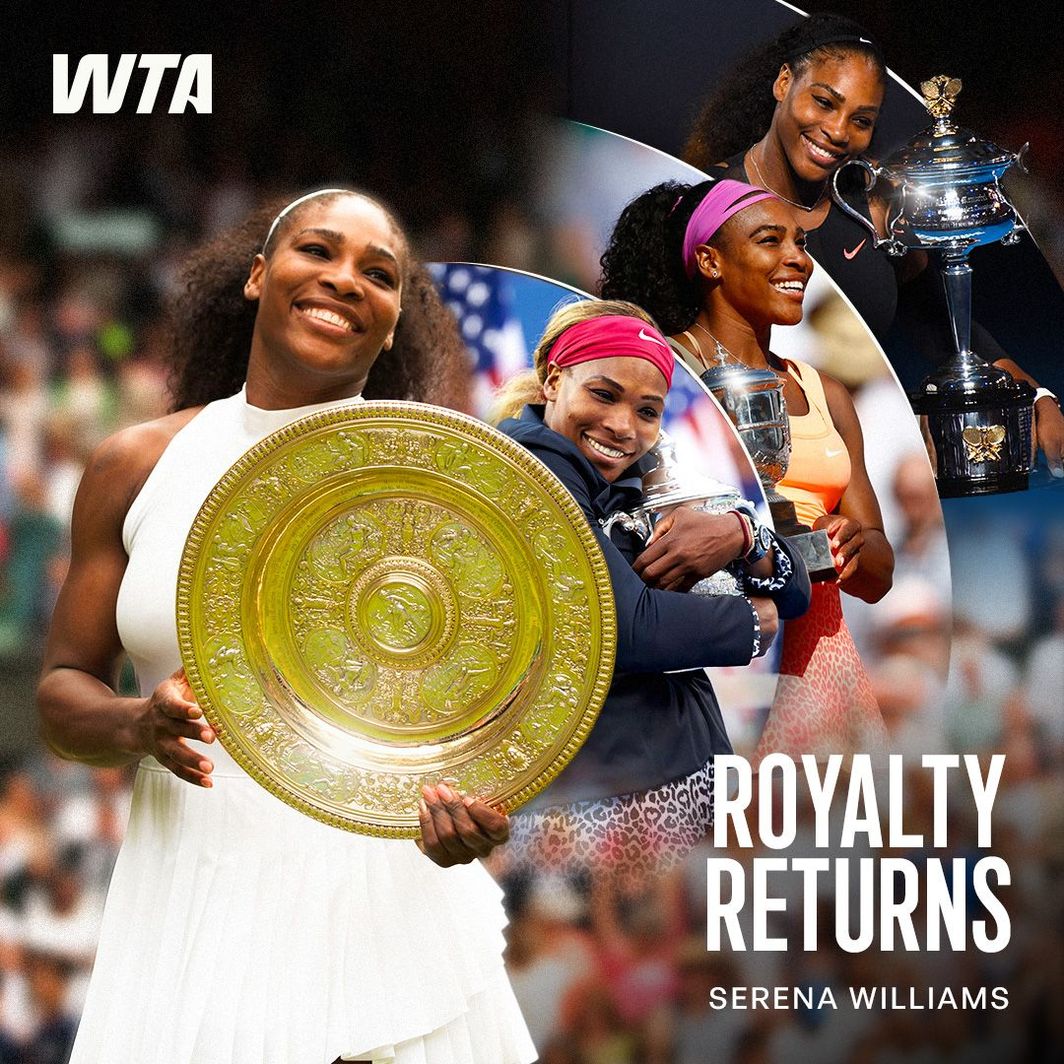
Yet her influence extended beyond statistics.
Williams challenged traditional assumptions about athletic power, body image, race, motherhood, and the commercial possibilities available to female athletes.
She helped bring new audiences to tennis while inspiring younger players to develop their own identities and competitive styles.
Her career included extraordinary victories, painful defeats, injuries, controversies, and personal challenges.
Understanding Serena Williams means examining both her achievements and the wider changes that occurred in women’s tennis during her time at the top.
Early Life: From Compton to the International Tennis Stage
Serena Jameka Williams was born on September 26, 1981, in Saginaw, Michigan.
She grew up in a family that placed considerable emphasis on tennis development.
Her parents, Richard Williams and Oracene Price, played important roles in introducing Serena and her older sister Venus to the sport.
Much of their early training took place on public courts in Compton, California.
The sisters developed their skills in an environment far removed from the private tennis clubs traditionally associated with elite American tennis.
Their father’s approach attracted attention because he believed both daughters could become leading professional players.
However, their development was not based entirely on one person’s influence.
Oracene Price also contributed significantly to their training, discipline, and personal development.
The Importance of Venus Williams
Venus Williams was central to Serena’s early tennis journey.
As the older sister, Venus entered the professional spotlight first and helped demonstrate that the family’s ambitions were realistic.
The sisters trained together, supported one another, and eventually became both teammates and opponents at the highest level.
Their relationship would become one of the most distinctive stories in tennis history.
They were not simply two successful players from the same family.
Together, they helped change the visibility of Black women in a sport where opportunities and representation had historically been unequal.
Entering Professional Tennis
Serena made her professional debut in 1995.
Her early years on tour involved adjusting to stronger opponents, international travel, and the physical demands of professional competition.
Her powerful groundstrokes and athletic ability quickly attracted attention.
However, developing into a Grand Slam champion required more than raw power.
Williams needed to improve her consistency, court positioning, tactical judgment, and ability to handle important moments.
By the late 1990s, those qualities were beginning to come together.
The 1999 US Open: Serena’s First Grand Slam Singles Title
Serena Williams won her first Grand Slam singles championship at the 1999 US Open.
She defeated Martina Hingis in the final.
The victory was a major turning point.
At just 17 years old, Williams had demonstrated that she could defeat established champions on one of tennis’s biggest stages.
Her success also represented an important moment in American sporting history.
She became the first Black American woman to win a Grand Slam singles title since Althea Gibson’s achievements in the 1950s.
The result brought greater attention to the Williams family and signaled the arrival of a new generation in women’s tennis.
The Playing Style That Changed Women’s Tennis
Serena Williams did not invent powerful tennis.
Earlier champions had already demonstrated the effectiveness of aggressive groundstrokes, strong serving, and attacking play.
However, Williams helped push those qualities to a new level of consistency and effectiveness.
Her game combined power with athletic movement, tactical intelligence, and the ability to perform under pressure.
The Serve: A Defining Weapon
Serena’s serve became one of the most important shots in women’s tennis.
She could generate exceptional speed while maintaining accuracy and variation.
Her serving ability allowed her to win free points and control rallies from the beginning.
It was particularly effective during important moments, when a well-placed serve could prevent an opponent from establishing pressure.
Unlike players who relied entirely on serving power, Williams could vary placement and spin to create different tactical opportunities.
Her serve helped establish a higher standard for the importance of first-strike tennis in the women’s game.
Aggressive Baseline Tennis
Williams was also known for her powerful forehand and two-handed backhand.
She frequently attempted to take control of rallies early rather than waiting for opponents to make mistakes.
Her groundstrokes could change direction quickly, forcing opponents to defend from difficult positions.
However, her success was not simply the result of hitting harder.
She developed the ability to recognize when to attack, when to defend, and when to change the pace of a rally.
That combination made her difficult to predict.
Movement and Athleticism
Williams possessed exceptional athletic ability.
Her speed, balance, and strength allowed her to recover from defensive positions and remain competitive in demanding rallies.
Although her game was often described primarily in terms of power, movement was essential to her success.
She could reach difficult balls and respond with aggressive shots that immediately changed the direction of a point.
The Serena Slam: Dominating Four Major Championships
One of Serena’s most remarkable achievements came between 2002 and 2003.
She won four consecutive Grand Slam singles titles:
- 2002 French Open
- 2002 Wimbledon
- 2002 US Open
- 2003 Australian Open
This achievement became known as the Serena Slam.
Although the titles were won across two calendar years, holding all four major singles championships simultaneously demonstrated extraordinary dominance.
Williams achieved the feat again between the 2014 US Open and 2015 Wimbledon.
Her ability to complete the sequence twice reflected both her versatility and her capacity to sustain elite performance across different surfaces.
Serena Williams’ Grand Slam Singles Record
Williams finished her career with 23 Grand Slam singles titles.
Her championships were distributed across all four major tournaments.
| Grand Slam | Singles Titles |
|---|---|
| Australian Open | 7 |
| French Open | 3 |
| Wimbledon | 7 |
| US Open | 6 |
| Total | 23 |
Her 23 major singles titles remain the highest total achieved by a woman during the Open Era.
Margaret Court won 24 major singles titles across the amateur and Open eras, making comparisons between their careers an important part of tennis history.
However, Williams’ achievements took place in a period of fully professional competition and increasing global participation.
Wimbledon: Seven Titles on Grass
Wimbledon became one of Serena’s most successful Grand Slam tournaments.
She won seven singles titles at the All England Club.
Her serve and aggressive groundstrokes were particularly effective on grass.
The surface rewarded players who could control points quickly and handle lower-bouncing balls.
Williams’ ability to serve accurately and attack short returns made her a formidable opponent.
She also demonstrated that power could be combined with the movement and tactical flexibility required for grass-court success.
Australian Open: Seven Championships in Melbourne
Williams also won seven Australian Open singles titles.
The tournament’s hard courts provided conditions well suited to her aggressive baseline game.
Her achievements in Melbourne included some of the most memorable moments of her career.
The 2017 Australian Open Final
At the 2017 Australian Open, Serena defeated her sister Venus in the women’s singles final.
The victory gave Serena her 23rd Grand Slam singles championship.
It also returned her to world No. 1.
Serena later revealed that she had been pregnant during the tournament.
The achievement became an important part of her personal and sporting story.
The Rivalry Between Serena and Venus Williams
The rivalry between Serena and Venus Williams was unlike most rivalries in professional tennis.
They were sisters, training partners, doubles teammates, and direct competitors for major titles.
Their matches frequently attracted global attention.
Both players were capable of serving powerfully, controlling baseline rallies, and performing under pressure.
However, they developed different tactical strengths and competitive personalities.
Serena finished their professional singles head-to-head rivalry with a 19-12 advantage.
They also met in nine Grand Slam singles finals, with Serena winning seven.
Success as Doubles Partners
The sisters were also an exceptional doubles team.
Together, Serena and Venus won 14 Grand Slam women’s doubles titles.
They also won three Olympic gold medals in women’s doubles.
Their partnership demonstrated their ability to combine individual strengths into effective team tennis.
For many fans, the Williams sisters represented a new level of visibility and opportunity in women’s professional sport.
Olympic Success and International Competition
Serena Williams won four Olympic gold medals during her career.
She captured women’s singles gold at the 2012 London Olympics.
She also won women’s doubles gold with Venus at Sydney 2000, Beijing 2008, and London 2012.
Her achievements at the Olympics demonstrated her ability to succeed in both individual and team competition.
They also contributed to her status as one of the most successful tennis players in Olympic history.
Serena Williams and the World No. 1 Ranking
Williams spent 319 weeks at world No. 1 in the WTA singles rankings.
She also held the top ranking for 186 consecutive weeks, tying Steffi Graf’s record for the longest uninterrupted period at No. 1 in women’s tennis.
These achievements reflect sustained excellence across multiple seasons.
Maintaining the top ranking requires more than occasional tournament victories.
It demands consistent results against the strongest players in the world.
Williams repeatedly demonstrated that ability despite injuries, changing opponents, and interruptions to her schedule.
Rivalries That Defined Serena’s Career
Although her rivalry with Venus was particularly significant, Serena faced several other elite opponents throughout her career.
Martina Hingis
Hingis was one of the leading players when Serena emerged in the late 1990s.
Their contrasting styles created compelling matches.
Hingis relied heavily on anticipation, placement, and tactical intelligence.
Serena brought greater power and aggressive shot-making.
Their 1999 US Open final became a defining moment in Serena’s breakthrough.
Maria Sharapova
Serena’s rivalry with Maria Sharapova attracted significant media attention.
Both players were powerful baseline competitors with major commercial profiles.
Williams dominated their head-to-head record, finishing with a 20-2 advantage.
The rivalry demonstrated her ability to maintain a tactical advantage against another elite attacking player.
Victoria Azarenka
Victoria Azarenka became one of Serena’s important rivals during the 2010s.
Their matches frequently featured aggressive baseline exchanges and strong returning.
Azarenka challenged Serena with her movement, consistency, and ability to redirect pace.
These contests helped maintain a high competitive standard during Serena’s later championship years.
Changing Expectations of Female Athletic Power
One of Serena’s most important contributions to tennis was the way she challenged traditional expectations of female athletes.
Her muscular build, explosive movement, and powerful playing style became central to her sporting identity.
Throughout her career, Williams faced public commentary about her appearance that often went beyond normal sporting analysis.
She also experienced racialized and gendered criticism.
Rather than conforming to a narrow image of how a female tennis player should look or behave, Serena developed a public identity closely connected to her strength and individuality.
Her success helped broaden the range of athletic bodies and personalities represented at the highest level of women’s sport.
Race, Representation, and Cultural Influence
Serena and Venus Williams entered professional tennis in a sport where Black women had historically faced barriers to participation and recognition.
Earlier pioneers, including Althea Gibson, had already challenged those barriers.
The Williams sisters built on that history and brought unprecedented visibility to a new generation of Black tennis players.
Their success inspired athletes who had not always seen themselves represented in elite tennis.
However, Serena’s cultural influence was not limited to race.
She became an international figure whose achievements crossed national and sporting boundaries.
Her visibility helped demonstrate that female athletes could become major global cultural and commercial personalities.
Fashion and Self-Expression on the Tennis Court
Serena’s influence also extended to tennis fashion.
Throughout her career, she wore distinctive outfits that attracted attention and sometimes controversy.
Her clothing choices became a form of personal expression.
They also challenged traditional assumptions about what female tennis players should wear.
One widely discussed example was the black catsuit she wore at the 2018 French Open.
The outfit generated debate about clothing rules, athletic functionality, and personal expression.
Serena’s approach demonstrated that sportswear could communicate identity as well as serve a practical purpose.
Motherhood and the Challenges of Returning to Professional Tennis
In 2017, Serena gave birth to her first daughter.
She experienced serious medical complications following childbirth, including a pulmonary embolism.
Her recovery became a major personal challenge.
Returning to professional tennis required extensive physical rehabilitation and preparation.
Williams resumed competition in 2018.
Although she did not win another Grand Slam singles title, she reached four major singles finals after becoming a mother.
Her comeback helped draw attention to the physical and professional challenges faced by mothers in elite sport.
It also contributed to wider conversations about maternity protections and ranking policies in professional tennis.
Controversies and Difficult Moments
Serena’s career was not without controversy.
At the 2009 US Open, she received a point penalty following an angry confrontation with a line judge during her semifinal against Kim Clijsters.
Another widely discussed incident occurred during the 2018 US Open final against Naomi Osaka.
Williams disputed several officiating decisions and received code violations that affected the match.
The incident generated debate about officiating, player behavior, and possible differences in how male and female athletes are judged.
These events remain part of her competitive history.
They also illustrate the intense pressure and public scrutiny surrounding elite athletes.
The Final Chapter: US Open 2022
In 2022, Serena announced that she was moving away from professional tennis.
She described the decision as an evolution toward other priorities rather than a conventional retirement.
Her final professional tournament was the 2022 US Open.
She defeated Danka Kovinić in the first round and Anett Kontaveit in the second.
Her run ended in the third round against Ajla Tomljanović.
The tournament became an emotional farewell for fans who had followed her career for more than two decades.
Although her final match ended in defeat, the occasion reflected the extraordinary influence she had developed throughout her career.
Serena Williams’ Career Achievements
| Achievement | Record |
|---|---|
| Grand Slam singles titles | 23 |
| Grand Slam women’s doubles titles | 14 |
| WTA singles titles | 73 |
| Weeks at world No. 1 | 319 |
| Consecutive weeks at No. 1 | 186 |
| Olympic gold medals | 4 |
| Serena Slams | 2 |
| Career Grand Slam | Completed in 2003 |
| Final professional tournament | US Open 2022 |
How Serena Williams Influenced the Next Generation
Serena’s influence is visible in the development of younger players.
Many modern competitors emphasize powerful serving, aggressive returning, and the ability to control baseline rallies.
Although these qualities existed before Serena’s career, her sustained success helped demonstrate their importance at the highest level.
Her influence also extended to confidence and self-expression.
Younger athletes increasingly recognize that success does not require abandoning personal identity or conforming to a single image of professionalism.
Players such as Coco Gauff and Naomi Osaka have spoken about the significance of the Williams sisters in shaping their understanding of what was possible in tennis.
Serena helped create a more visible pathway for athletes from different backgrounds to imagine themselves competing on the sport’s biggest stages.
Beyond Tennis: Business and Cultural Influence
Serena developed business interests alongside her sporting career.
Her activities have included fashion, investment, and entrepreneurship.
She established Serena Ventures, an investment firm focused on supporting businesses and founders.
Her work outside tennis reflects the broader commercial opportunities available to globally recognized athletes.
However, Serena’s significance is not simply that she became successful in business.
Her career helped demonstrate that female athletes could build influential professional identities beyond competition.
Serena Williams’ Career Timeline
| Year | Milestone |
|---|---|
| 1981 | Born in Saginaw, Michigan |
| 1995 | Makes professional tennis debut |
| 1999 | Wins first Grand Slam singles title at US Open |
| 2000 | Wins Olympic doubles gold with Venus |
| 2002 | Wins three Grand Slam singles titles |
| 2003 | Completes first Serena Slam |
| 2012 | Wins Olympic singles and doubles gold |
| 2015 | Completes second Serena Slam |
| 2017 | Wins 23rd Grand Slam singles title |
| 2018 | Returns to professional tennis after childbirth |
| 2022 | Plays final professional tournament at US Open |
Frequently Asked Questions About Serena Williams
How many Grand Slam singles titles did Serena Williams win?
Serena Williams won 23 Grand Slam singles titles, the most by any woman in the Open Era.
How many Wimbledon titles did Serena win?
She won seven Wimbledon singles championships.
What is the Serena Slam?
The Serena Slam refers to holding all four Grand Slam singles titles simultaneously across two calendar years. Williams achieved this twice.
How many Olympic gold medals did Serena Williams win?
She won four Olympic gold medals: one in singles and three in women’s doubles.
Did Serena Williams play doubles with Venus Williams?
Yes. The sisters won 14 Grand Slam women’s doubles titles and three Olympic doubles gold medals together.
When did Serena Williams stop playing professional tennis?
Her final professional tournament was the 2022 US Open.
How did Serena Williams change women’s tennis?
She helped raise expectations for serving power, aggressive baseline play, athletic performance, commercial influence, and representation in professional tennis.
Is Serena Williams the greatest female tennis player of all time?
She has one of the strongest historical cases, particularly because of her 23 Open Era Grand Slam singles titles, longevity, and influence. However, comparisons with players from different eras depend on the criteria used.
Conclusion: A Legacy Beyond Championships
Serena Williams transformed women’s tennis through a combination of competitive achievement, athletic innovation, and cultural influence.
Her 23 Grand Slam singles titles established a remarkable record in the Open Era.
Her powerful serve and aggressive baseline game helped redefine expectations of elite women’s tennis.
Her partnership and rivalry with Venus Williams created one of the most important stories in the sport’s modern history.
Beyond the court, Serena challenged traditional expectations surrounding race, gender, athletic identity, and motherhood.
Her career also demonstrated that professional athletes could develop influential identities in business, fashion, and wider culture.
Although her final professional tournament came in 2022, her influence continues through the players she inspired and the changes she helped bring to the sport.
Serena Williams will be remembered not only as one of tennis’s greatest champions, but as an athlete who helped reshape what women’s tennis could become.
Leave a Reply